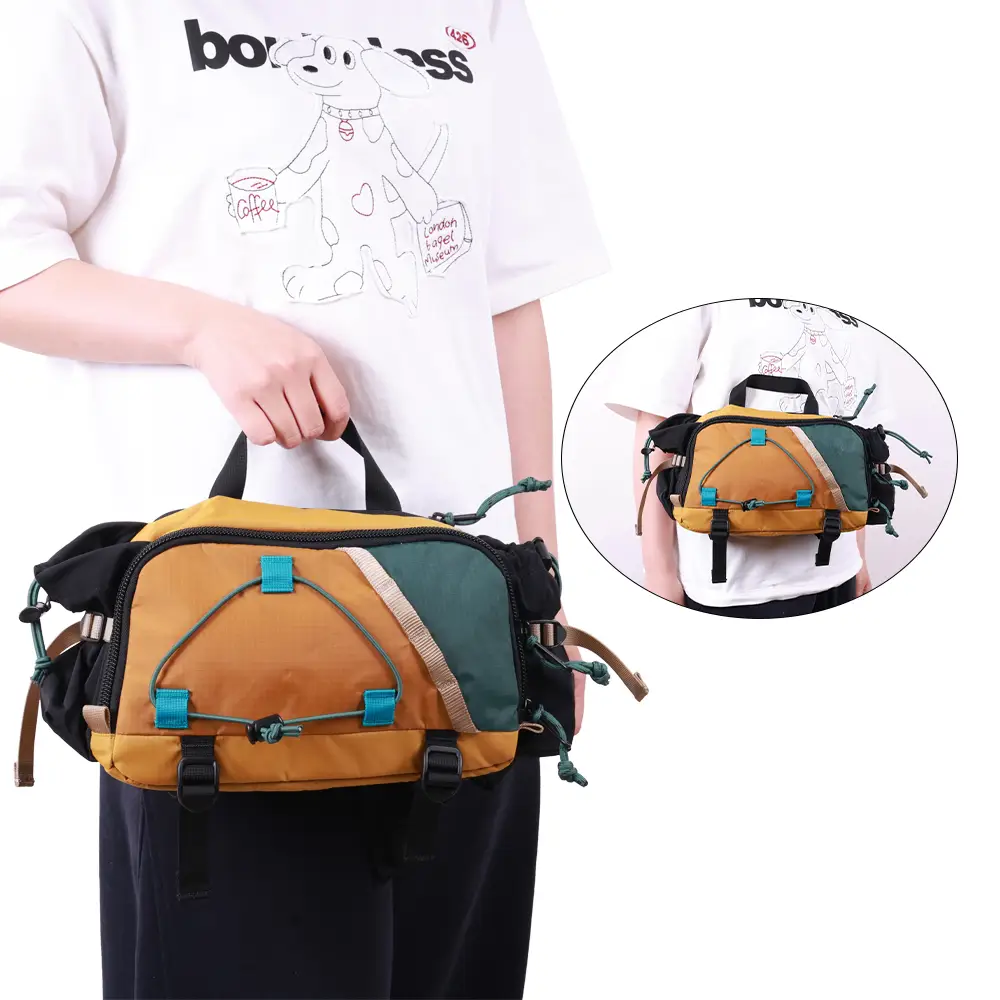
The same belongings can accompany a day hike at the waist or across the body without moving into a different bag. Our ChangRong CXN1149 makes that comparison possible through adjustable straps and one convertible waist pack body. Deciding between the positions begins by keeping the contents unchanged; otherwise, a lighter load or different packing arrangement can obscure the effect of changing the carrying mode.
Hold the Bag and Contents Constant
CXN1149 has a capacity of four litres in either configuration, and its dimensions remain 27.5 × 10 × 17 cm. Switching to the Convertible Crossbody Bag arrangement changes how the body is worn, rather than creating additional storage. A comparison therefore starts with the same packed bag, including the locations of belongings inside its zippered compartments and exterior pockets.
Our carrying examples include smartphones, power banks, keys, wallets, snacks and small water bottles. They describe possible contents, not a promise that every combination fits. Pocket shape and individual item dimensions also determine how that space is occupied.
The actual items establish whether the available space suits the outing. Keeping those items and their positions consistent also separates a carrying preference from a packing decision: removing a bottle between comparisons would change both.
Read Waist Fit Through Contact and Closure
At the waist, the buckle fastening and ribbed padded back panel bring adjustment and body contact together. The belt closes around the wearer while the panel rests against the body. Clothing beneath these parts belongs in the assessment, since an autumn layer can change the surface against which the bag and belt are positioned during a hike.
With the convertible waist pack loaded, fastening the buckle and adjusting the belt establish a starting position. A normal reach toward a zippered compartment then reveals where the opening falls relative to the hands. A preference for that location needs to coexist with an acceptable belt setting; access alone does not settle how the packed body sits.
Bending to examine a trail feature presents a different posture from standing beside the path. The practical comparison concerns the actual bag position in those postures, with the intended clothing and contents. No universal stability ranking follows from the presence of padding or a buckle. The waist configuration remains a candidate whose suitability depends on the conditions in which it will be used.
Move the Access Point Across the Body
A diagonal strap brings the bag into a different relationship with the torso and the reaching hand. Strap adjustment sets the proposed position of the Convertible Crossbody Bag configuration. Before comparing retrieval, the wearer needs an arrangement that makes sense with the day’s clothing; shortening or lengthening the strap changes where the same opening can be approached.
Reaching a snack during a stop might favour a different bag position from carrying it while walking. Access matters during the stop itself, whereas the strap position accompanies the walking between stops. Those preferences can be examined separately.
The relevant observations are the route of the hand, the position of the compartment and any adjustment needed before retrieval. They do not establish a measured advantage in speed, shoulder pressure or comfort for either mode.
A jacket added after a cool stop introduces another condition without changing the bag itself. The chosen strap setting can be revisited with that layer in place. If access then feels more convenient at the waist, conversion offers a different arrangement to consider. Another wearer may retain diagonal carrying throughout; different preferences need not produce one shared winner.
Carry the Same Storage Into Either Mode
The elastic front cord, adjustment toggle and webbing remain on the exterior regardless of carrying position. Drawstring side pockets provide separate openings beside the zippered storage, while a top handle provides a handling point. Comparing modes includes checking where these features fall when worn, rather than assuming that a feature has the same accessibility in both positions.
An exterior item also needs its own placement decision. A small bottle proposed for a side pocket can be checked against that pocket’s opening and drawstring, with the bag in each chosen position. An unchanged storage layout may produce different reaching movements. The front cord and webbing similarly require a defined purpose instead of an assumption that every attachment suits every object.
We can develop ChangRong structural adjustments around a specific difficulty identified during this comparison. A proposed change to pocket placement, for example, needs to account for both carrying positions if both remain part of the brief.
Repositioning one pocket could alter access in both carrying modes. Material and branding choices can accompany that work, while the agreed layout keeps the conversion requirement visible during development.
The convertible waist pack uses tear resistant, water repellent fabric with protection against light splashes and dust. Neither wearing mode extends that protection to prolonged rain or immersion. Conditions on the day therefore affect the suitability of the outing and packing plan independently of strap preference. Changing position does not change the stated material boundary.
A carrying choice can change during one hike as clothing, activity or retrieval preferences change. With our ChangRong Convertible Crossbody Bag, the comparison remains grounded in one packed body. Waist and diagonal positions offer alternatives under different conditions, while the same capacity, compartments and material limits continue to apply.