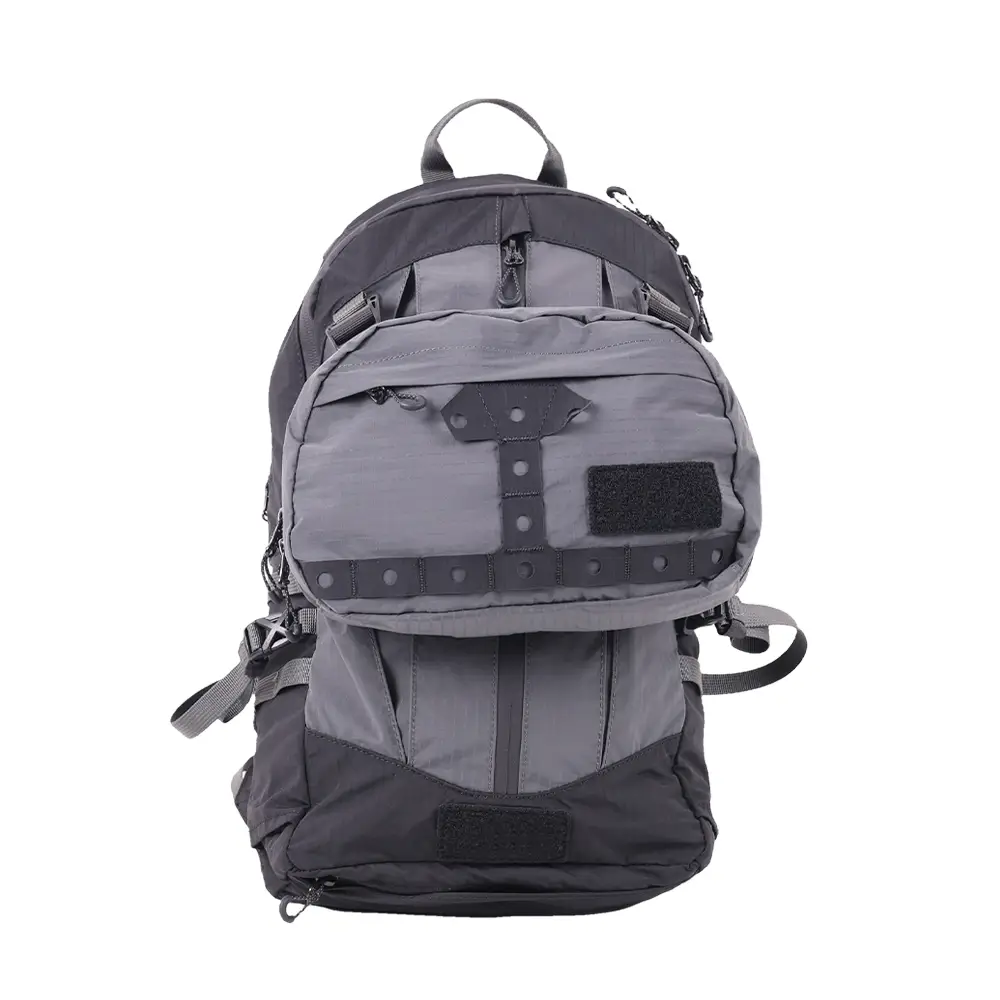
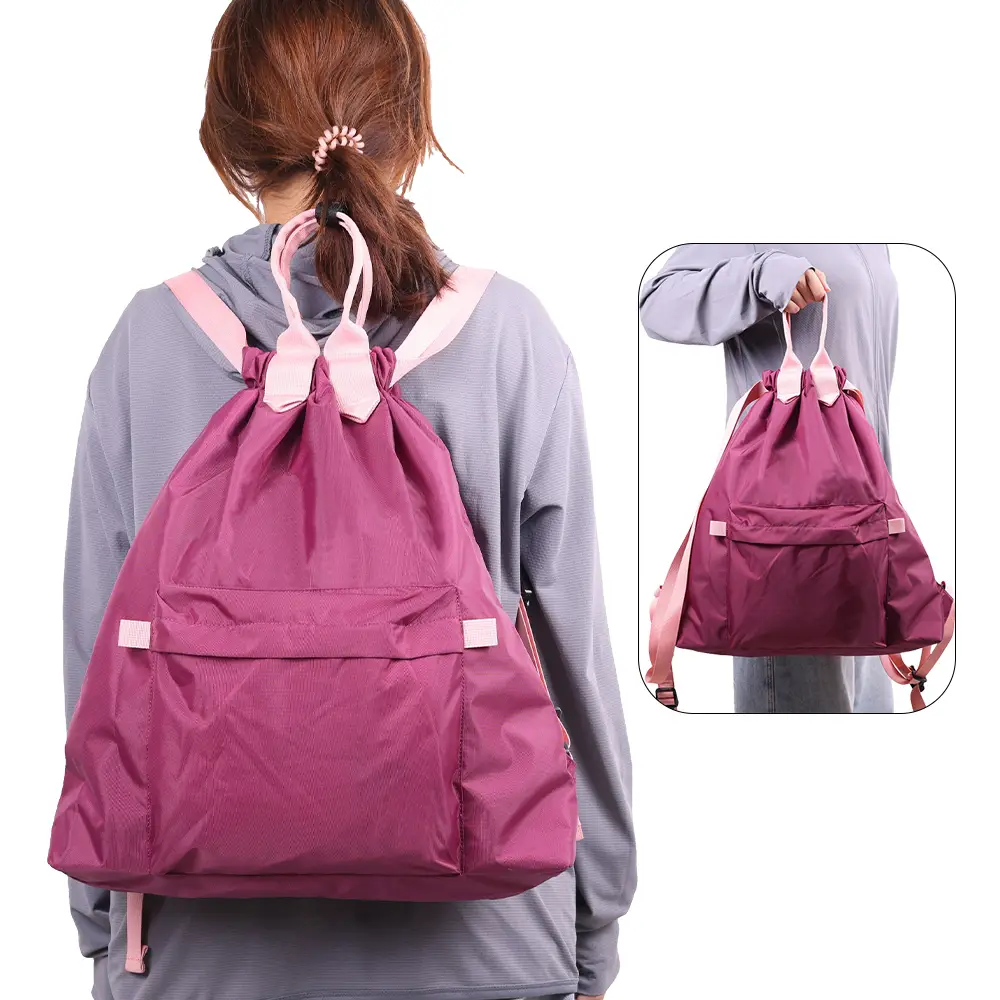
A phone, keys, wallet and water bottle accompany a short autumn walk for different reasons. The phone may be consulted during the outing, while the keys can remain unused until the return home. Water occupies a different shape and amount of space from either. A crossbody outdoor bag organizes this small collection through the relationship between external storage and the space behind its main opening.
Keep the Essentials in Proportion
The contents of a casual hiking bag begin with a limited set of everyday belongings. Expanding that set changes the packing problem, even if the route remains short. We start with the actual items rather than assume that every outdoor outing requires the same arrangement. A wallet and a bottle present different questions about placement before pocket dimensions enter the discussion.
In an Outdoor Travel Shoulder Bag, a bottle requires space for its whole shape, including the part approached when taking it out. Keys and a wallet occupy smaller areas, but leaving them loose beside a larger item may complicate finding them. Separating their proposed positions gives the packing arrangement an order without turning every belonging into a separate compartment requirement.
Autumn supplies the setting for this design discussion, rather than a new specification for the bag. The belongings still determine how much space is needed. A short walk combined with shopping or a journey home may involve a different collection from a dedicated casual hike. Adding more items deserves a fresh look at their placement, not an assumption about unused capacity.
Arrange Storage from the Outside In
An exterior pocket can be accessed without opening the main compartment. Starting at the outside, the user can separate small-item storage from the larger body. On our ChangRong CXN1150, the green exterior includes zippered storage and an attached small zippered pouch. The pouch has its own boundary, making it a distinct location within the overall arrangement.
One proposed layout might put keys in the attached pouch while reserving another location for the phone. That is a packing example, rather than a prescribed use for either pocket. The important distinction is between assigning an item deliberately and assuming that a pocket will suit it because the item is small. Its actual shape and the opening both matter.
Moving inward brings the fold-over upper section and central fastening buckle into view. The fold forms the upper part of the body, and the buckle secures the opening. A crossbody outdoor bag with this construction presents a different storage boundary from the exterior zippered areas. The main contents belong behind that folded upper section, with their arrangement considered as a group.
For an Outdoor Travel Shoulder Bag layout, this outside-to-inside order can guide a simple packing exercise. Small belongings receive proposed exterior positions first; the bottle and other intended main-body items are then placed together.
Their placement may reveal that a small item belongs inside instead. The arrangement remains open to that adjustment rather than treating exterior storage as a compulsory destination.
The CXN1150 measures 25.5 × 10 × 30.5 cm. These external measurements describe the body, while the actual belongings establish what a proposed packing arrangement contains. Rotating an item changes its position within that space without changing the item’s size.
We keep those two descriptions separate: dimensions provide a starting scale, and placement addresses the objects occupying it. The fold, buckle and exterior openings remain identifiable parts of the same bag.
Set the Carrying Position for a Short Outing
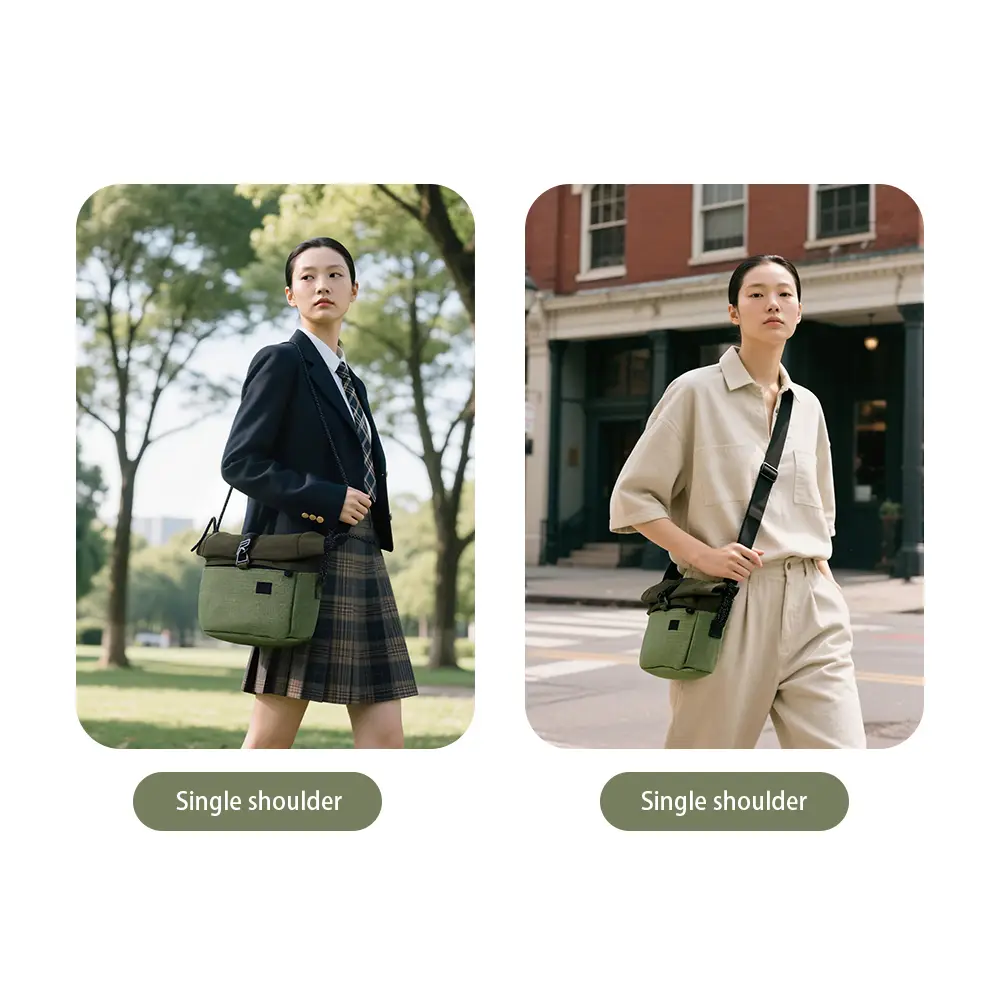
Where the bag rests affects the direction from which its pockets are approached. The adjustable carrying arrangement supports shoulder or crossbody use, with a cord-based strap and a padded shoulder section. Strap adjustment relates the body position to the person carrying it. The padding belongs at the shoulder contact area; it does not determine where a particular item is stored.
Our crossbody outdoor bag discussion can therefore move from storage positions to the position of the loaded body. A proposed phone location has little meaning without knowing where that opening sits during the outing. Taking the intended belongings into this comparison keeps the storage and carrying questions attached to the same packed arrangement, rather than judging each component in isolation.
Woven polyester gives CXN1150 its tear-resistant and wear-resistant fabric construction. These material properties address the fabric itself, while the fold-over opening and zippered exterior storage describe other parts of the design.
At ChangRong, fabric changes can be considered alongside a proposed structural adjustment. Changing either requires attention to the particular feature involved, rather than a general request for outdoor capability.
Commuting, city walks, shopping, short trips and weekend outings sit alongside casual hiking among the model’s intended uses. Their shared starting point is everyday belongings carried for a limited outing. Colors and logos can reflect the intended setting, while a structural request concerns how the items occupy the bag. Each choice has its own place in defining the required version.
Keeping an outing light includes deciding what to leave out. An Outdoor Travel Shoulder Bag brief gives ChangRong a defined collection of belongings around which we can discuss the necessary configuration. The useful limit is the scale of the intended trip, with additional features justified by something that actually needs to come along.