Reaching a folded jacket becomes complicated when a charger, notebook and other belongings must be moved first. The problem lies in their arrangement as much as in the amount of space available. A Modular Travel Backpack can be organized around the occasions when each item is needed. Our design work connects those access requirements to compartments and detachable storage, so clothing and work equipment need not share the same retrieval route.
Group Belongings by Their Next Use
The timing of an item’s next use provides a practical basis for grouping it. An outer layer needed during a journey has a different access requirement from spare clothing intended for the destination. Within a modular backpack, those distinctions can guide the relationship between the main clothing area and the belongings that need separate attention.
Frequency alone is insufficient, however. A laptop might remain packed during one trip and be removed repeatedly during another. Clothing may need frequent rearrangement on a day with changing activities, or stay untouched until arrival. A useful packing brief describes the actual itinerary instead of assigning a permanent priority to every category of belongings.
For a Modular Travel Backpack, the starting groups might include clothing, electronic equipment and personal accessories. The grouping is provisional: a notebook needed beside a laptop belongs to a different retrieval task from a wallet needed while the rest of the contents remain packed. Separating those tasks makes the intended layout easier to describe before individual pockets are assigned.
The boundaries between groups also matter during repacking. A removed outer layer needs somewhere to return without forcing unrelated items into a new position. Planning that return route gives the clothing area a defined role throughout the journey, rather than considering only the tidy arrangement at departure. The resulting groups provide inputs for the storage layout.
Give Each Group an Access Route
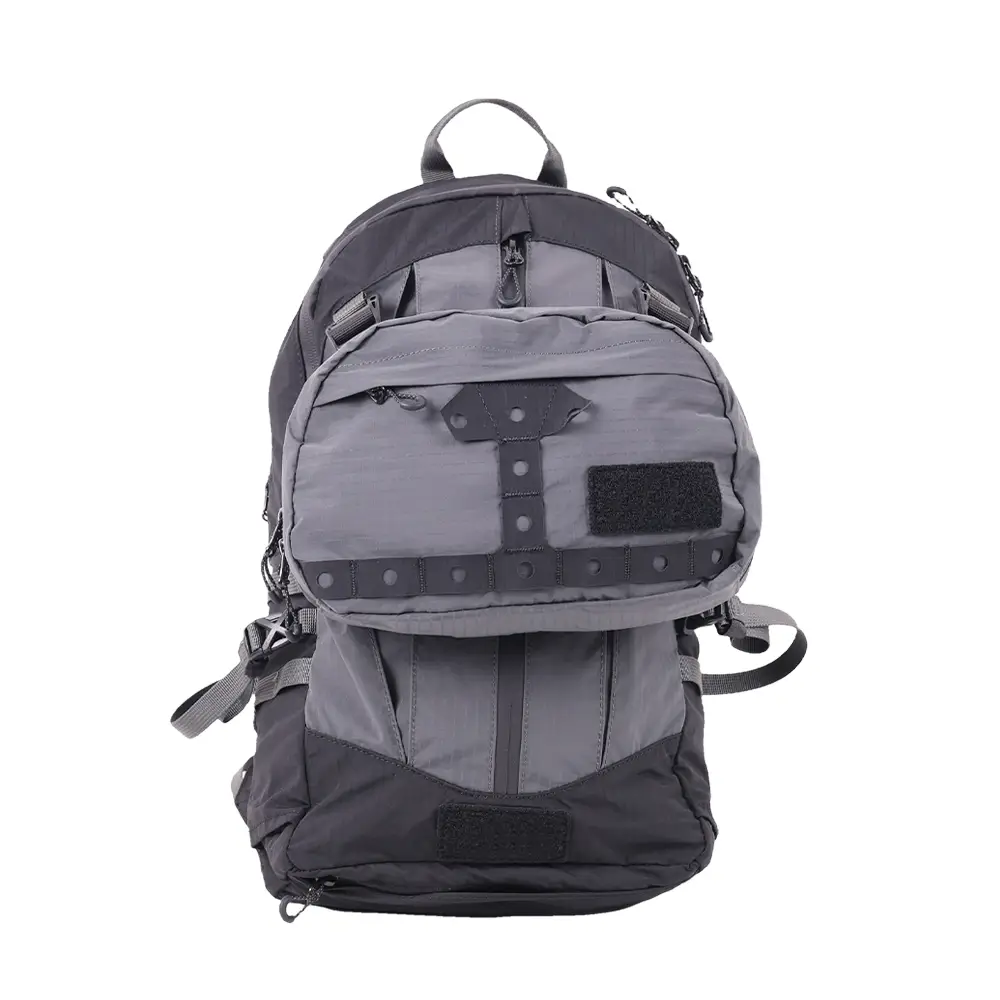
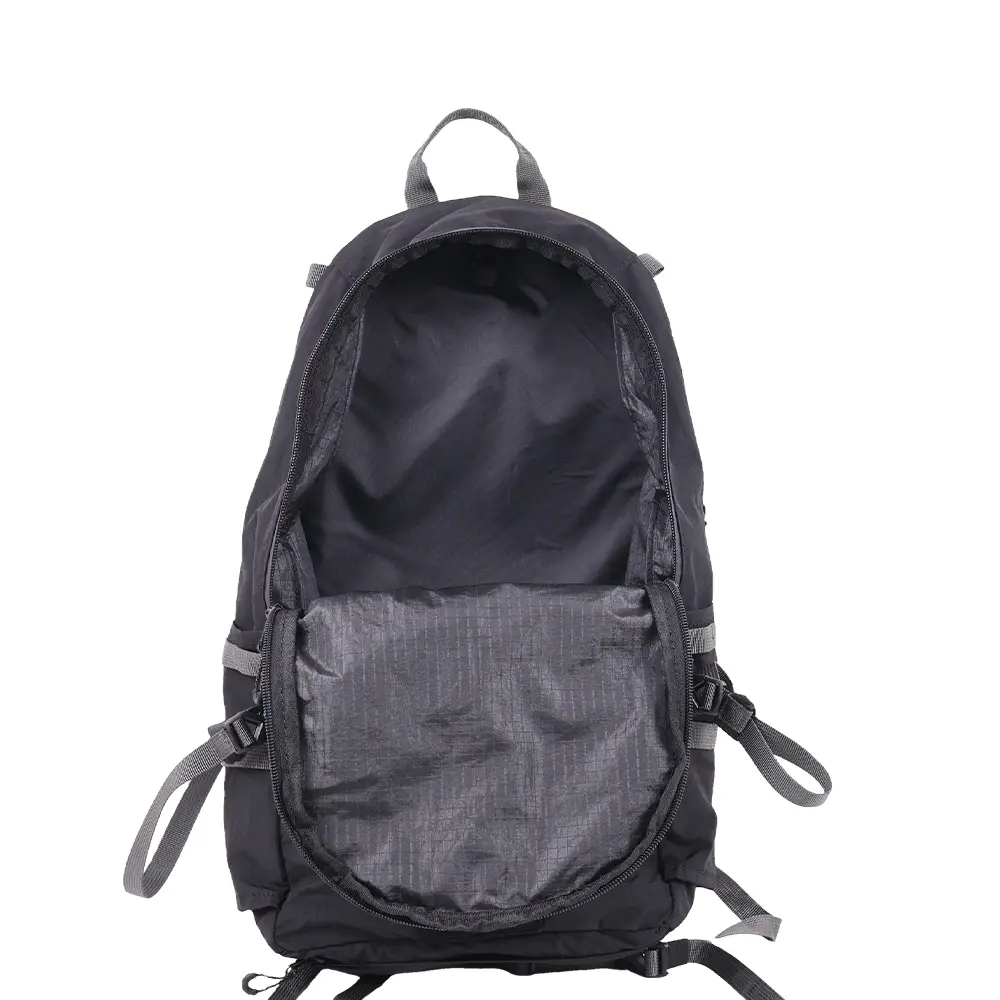
Moving a group changes more than its location if access to it depends on another compartment being opened first. A perimeter zipper frames the main opening of ChangRong’s CXN1155, while an internal divider panel and detachable front pouch create separate structural boundaries. We can use those known features to discuss which belongings stay together and which need independent access.
A pocket that can be reached only after moving the clothing group has a different role from an independently accessible pouch. Its name alone does not describe that access relationship during a particular journey.
The front pouch can function separately as a chest bag or waist bag. In a modular backpack arrangement, personal belongings assigned to that pouch can form a distinct carrying group. Clothing remains a separate planning task within the main body. Detachability therefore concerns the boundary between groups as well as the convenience of carrying a smaller part independently.
Laptop organization is included in CXN1155. Our custom development can additionally consider dedicated sections and smaller pockets for chargers, notebooks, cables and personal accessories alongside larger travel storage. Those proposed pockets need to be specified for the project; a general customization option should not be mistaken for the exact internal arrangement of every finished version.
The model measures 24 × 10 × 45 cm and belongs to our Transformable Series. Its dimensions establish an external reference for discussing the layout, while the relationship between divisions and openings determines how that layout is used. Work equipment and clothing should each have an understandable route into and out of their assigned spaces before the arrangement is approved.
Reconfigure for the Actual Weekend
A weekday arrangement does not automatically answer a weekend packing problem. The Modular Travel Backpack may need to accommodate a different balance of clothing, electronics and small belongings even when its external form remains familiar. The point of reconfiguration is to change the relationships that matter for the next journey, rather than add compartments without a clear purpose.
Consider a proposed weekend in which a laptop stays home and an additional clothing layer travels instead. The available organization can then be reviewed against that revised list. Another itinerary may retain the laptop and place more emphasis on separating its accessories. The clothing group can expand or contract as the planned layers and work requirements change between journeys.
At ChangRong, renderings and prototypes can show how a proposed clothing layout relates to capacity, shoulder straps and functional modules. The sample gives the proposed arrangement physical form. Clothing can be placed, removed and returned, while the intended work equipment occupies its own planned area, exposing conflicts that a list of pocket names might leave unclear.
Reviewing a modular backpack sample also means checking the arrangement after the detachable pouch has been removed and returned. The remaining contents still need clear positions.
Sample confirmation and preproduction checks connect the agreed layout to subsequent manufacturing, supported by incoming material checks, production sampling and finished item inspection. The useful output is an arrangement confirmed for the intended belongings.
ChangRong can develop a layout around the clothing and work items that a particular weekend journey requires. Once the arrangement is settled, the next outer layer can be packed away along its planned access route, with unrelated belongings retaining their assigned places and the remaining work equipment still organized for its own next moment of use.