A zipper opening interrupts the continuous surface of a backpack, and a stitched connection introduces another kind of junction. Rain protection has to account for those interruptions as well as the fabric between them.
For an urban edc backpack, daily access to work equipment and small belongings presents a related design challenge: protective details must coexist with openings that remain practical throughout the commute. Our sample reviews examine protective construction alongside practical daily access.
Locate the Possible Entry Points
Water exposure can involve the main opening, smaller exterior openings and connections between adjustable sections. Each has a different construction. A zipper gap, a needle hole and a compartment junction cannot be assessed simply by naming the surrounding fabric. The first task is to identify where these interfaces occur and how they relate to the storage inside.
A specification for the best backpack everyday carry commuters can use in rain needs to address those junctions. The intended conditions also matter: a brief should describe the proposed exposure and what needs protection. A broad request for a rain-resistant bag leaves the relationship among intended use, material selection and bag construction unresolved.
Laptop organization introduces a clear reason to examine the assembled design rather than judge only an exterior panel. The position of a storage area relative to an opening matters to the review. Internal divisions organize contents, but a divider alone does not establish the level of moisture protection around the items on either side of it.
Coordinate Covers, Closures and Seams
Protective details work at particular locations, so their placement needs to follow the identified entry points. Zipper selection, the position of the opening, a protective cover and the surrounding seam construction belong in the same design discussion. Additional treatments can form part of the proposal, but they need to be considered together with the interfaces they are intended to protect.
A cover also has to be considered in its working position. Its relationship with the opening may change when the compartment is packed or opened. Examining that relationship on a sample gives the design team a way to assess coverage alongside zipper access, instead of reviewing the cover as a loose component.
An urban edc backpack can have several access routes, and each extra route adds a construction detail to examine. A cover positioned over one opening does not describe another zipper elsewhere on the bag. Likewise, changing the main closure leaves stitching and adjustable connections as separate review items. The assembled structure determines which relationships need attention.
Material choice remains relevant without answering every question. Nylon, polyester, corduroy and GRS certified recycled RPET are available through our custom sourcing service. The project specification needs to connect the chosen material to zipper placement, seam construction and any additional protective treatment. A material name and a completed bag describe different levels of that design.
Observe the Complete Sample
Sample examination turns a proposed water entry route into a specific construction question. At ChangRong, we evaluate zipper gaps, stitching needle holes and connections between adjustable compartments during development for rain exposed expandable designs.
We inspect materials, stitching, zipper performance and structural connections, then examine how water interacts with different sections before deciding which construction changes are needed.
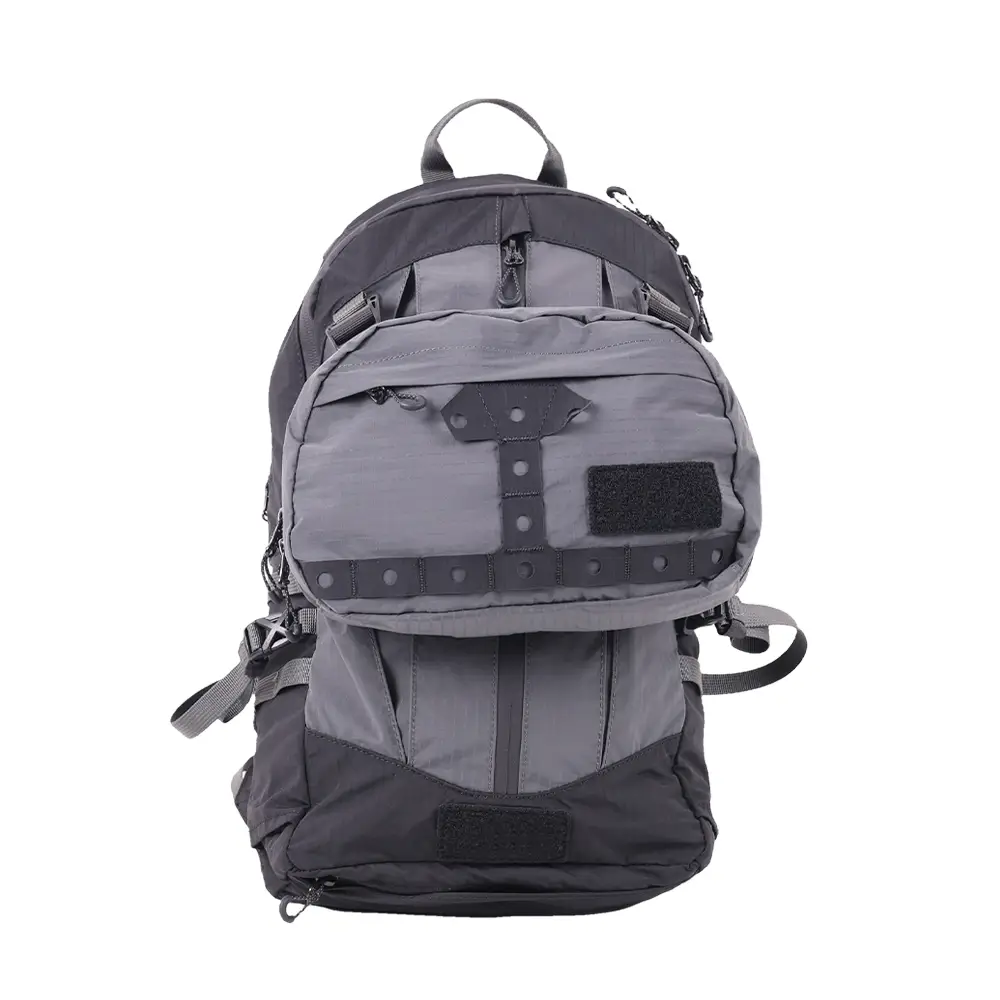
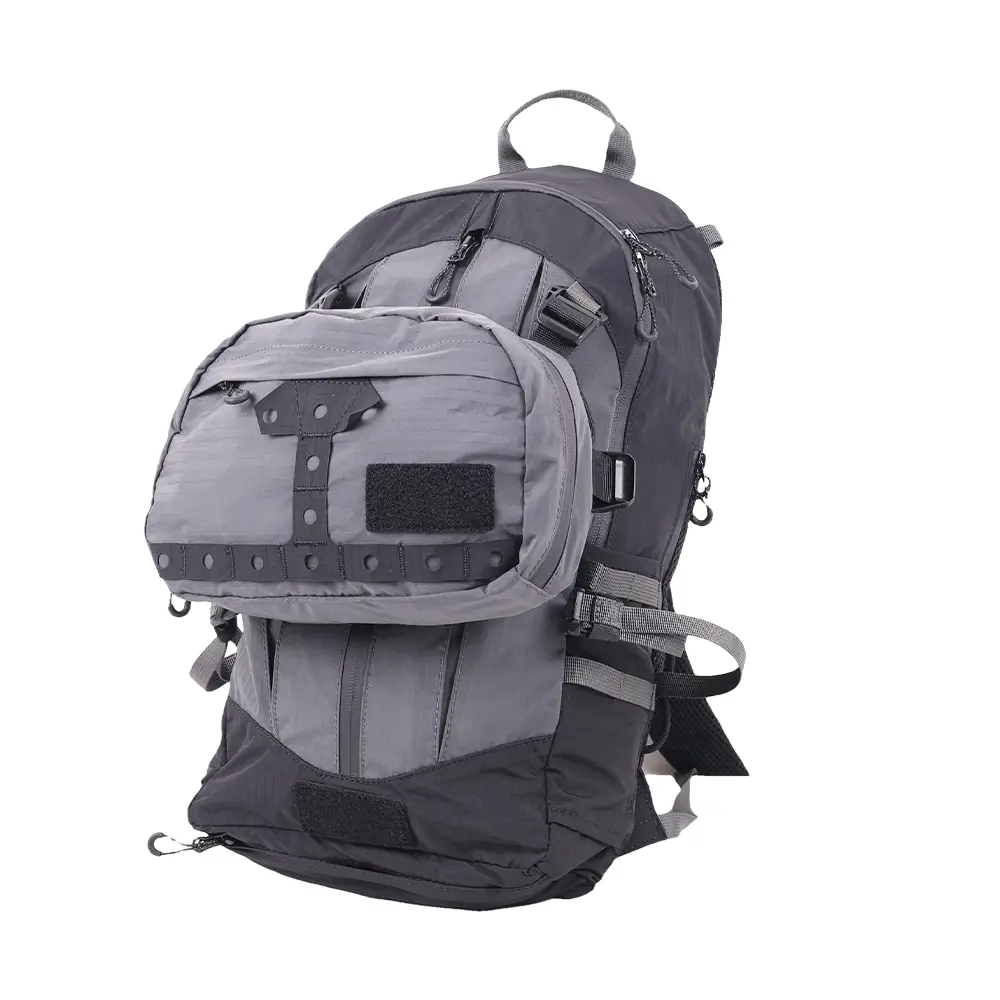
Our CXN1155 offers identifiable features for such a discussion: a perimeter main zipper, a vertical front zipper, an internal divider and modular storage. Away from the backpack, the detached front pouch functions in chest or waist configurations. Its attachment and surrounding organization require their own consideration within a proposed custom construction, alongside the main backpack opening.
The model measures 24 × 10 × 45 cm and includes laptop organization. Its adjustable shoulder straps, connecting buckle strap, lower waist belt and separated mesh back sections describe the carrying structure. These details establish the actual layout under discussion. Rain performance for a particular custom version still needs to be assessed through its agreed materials and complete construction.
At ChangRong, sample approval and preproduction verification connect the agreed design to manufacturing checks. Incoming materials, production sampling and finished item inspection each have a place in that workflow. Any assessment of the best backpack everyday carry users need for wet journeys benefits from this distinction between proposed protection and the construction actually examined.
Preserve the Commuting Routine
Access remains a design requirement after protective details have been proposed. A laptop compartment, personal accessories and a detachable pouch can create different retrieval tasks. Reviewing the opening sequence alongside its protective arrangement identifies where the two requirements intersect, especially when one compartment is accessed while the rest of the contents remain packed.
The urban edc backpack brief can therefore specify both the intended storage arrangement and the exposure conditions that its construction needs to address. Capacity and strap design can be adapted.
Renderings and prototypes let us examine compartment layouts and functional modules within the planned protective arrangement. The configuration should be examined as the combination intended for production.
ChangRong brings material, closure and structural checks into our development discussions. Ordinary access remains part of the brief. The best backpack everyday carry commuters can choose depends on their journey. Rain protection for that journey is bounded by the assembled bag construction and the specific exposure conditions examined during the project’s sample evaluation.