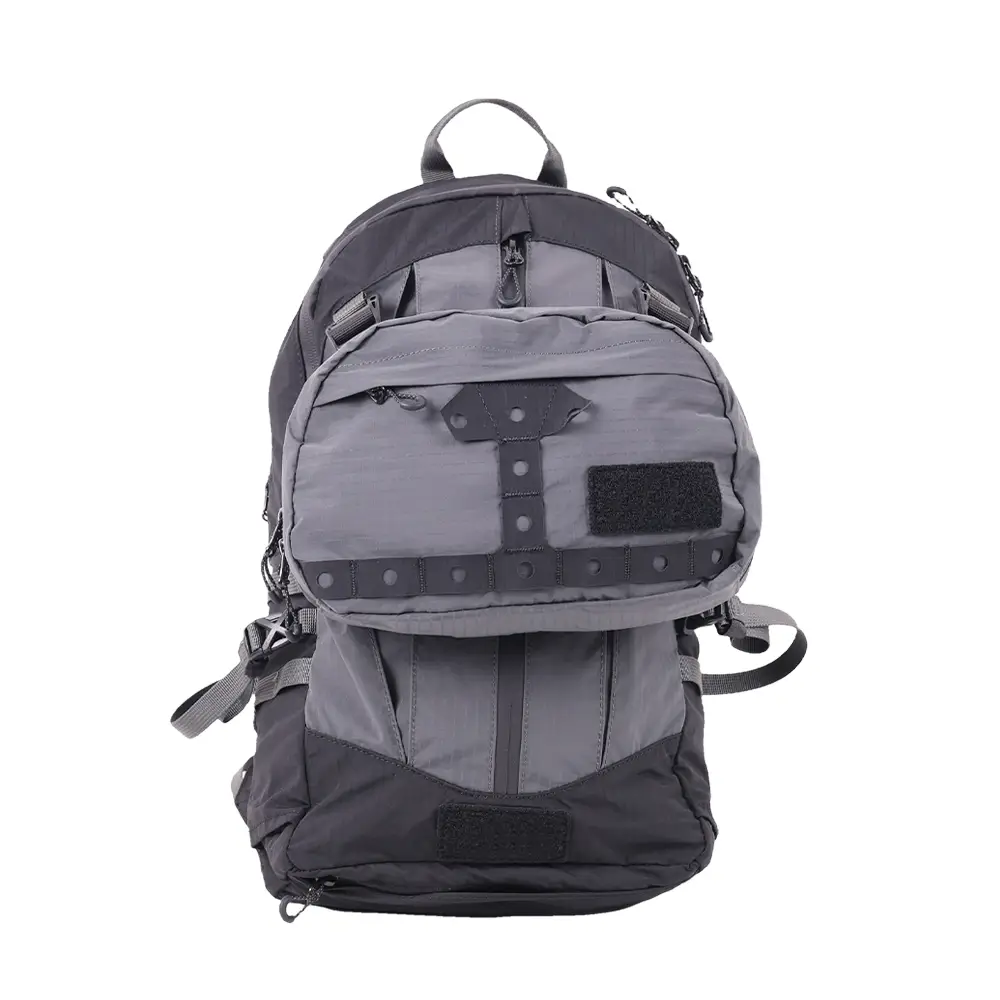
When someone leaves the main bag behind for a short outing, they must decide which belongings to take. A 3-in-1 convertible backpack addresses that separation through a larger carrying arrangement and a smaller independent component. The design task is to keep the relationship clear: what stays in the main body, what moves with the detachable part and how the arrangement works when the components come together again.
Define What Changes and What Remains
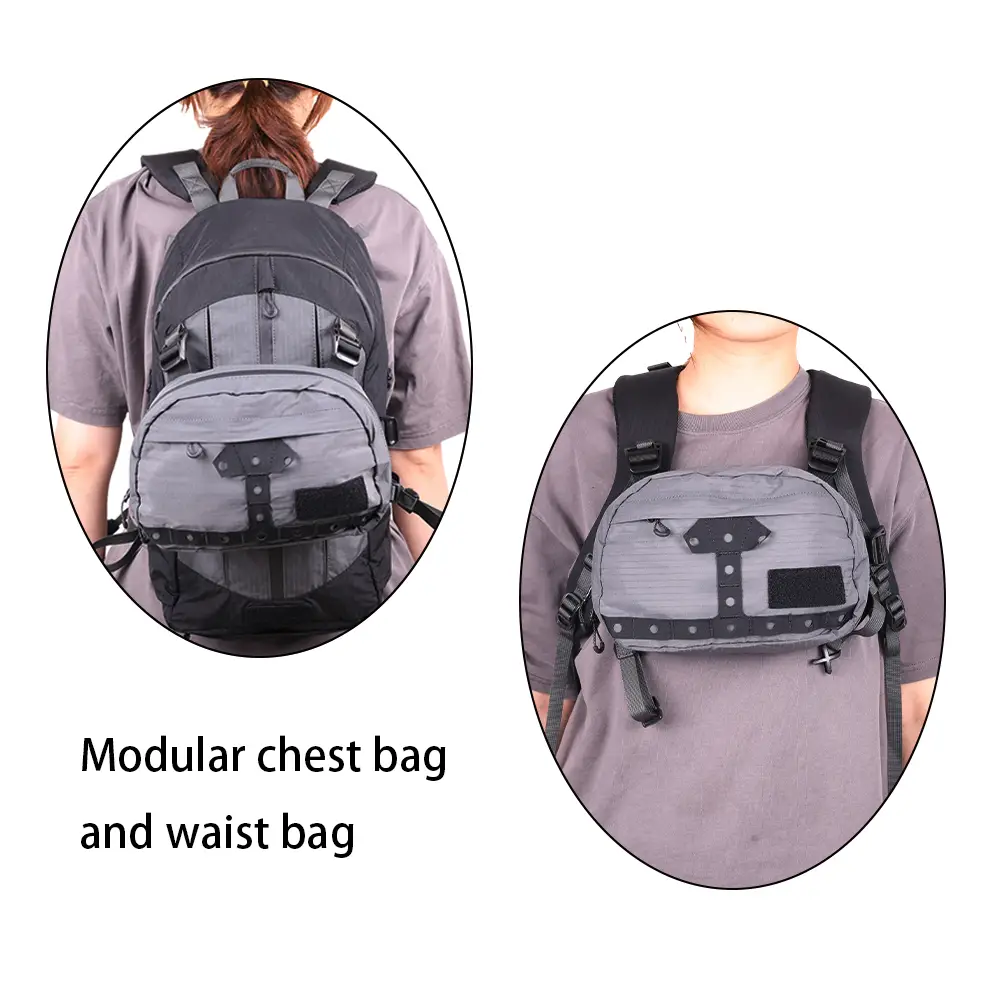
The components establish the meaning of the conversion. At ChangRong, our CXN1155 combines a backpack body with a detachable front pouch, which can be worn independently as a chest bag or waist bag. The smaller component changes its carrying role; the main backpack continues to provide the larger storage arrangement for commuting, outdoor activities and travel.
The model belongs to our Transformable Series, measures 24 × 10 × 45 cm and is positioned for male users. Its configurable compartments include laptop organization. A top handle, vertical front zipper, side webbing with buckles and a perimeter main zipper belong to the backpack body. An internal divider separates part of that body’s storage.
A Modular Laptop Backpack layout needs to preserve the distinction between equipment that remains in the main body and small belongings assigned to the front pouch. That division gives conversion a practical purpose. The project can define what should accompany a short departure from the main bag before deciding whether the smaller carrying arrangement meets the intended need.
A hybrid work brief might keep computer equipment in the main compartment and assign a wallet and keys to the pouch. That proposed division can then be examined as the components are separated.
Examine the Transition Between Modes
Conversion involves a sequence of handling tasks, even before the carrying position changes. The pouch has to be separated, prepared for its independent role and later returned to the larger arrangement. The design review concerns the clarity of that sequence and the whereabouts of the contents throughout it. Complicated adjustments or unclear structures can interrupt the intended changeover.
With a 3-in-1 convertible backpack, the number of named modes is less significant than the relationship between them. Excess straps and unnecessary adjustment can make the switch inconvenient. A prototype can expose those practical questions: which components need handling, whether their roles are understandable and what happens to belongings while the arrangement changes.
The transition also deserves attention in reverse. Returning from a short outing means the independent pouch becomes part of the larger carrying arrangement again. Its contents still need a defined place, and the main compartment needs to retain its organization. Reviewing both directions keeps the project focused on a complete pattern of use rather than only the initial separation.
Keep Equipment Organization Through the Change
Computer equipment creates a continuity requirement within a Modular Laptop Backpack project. The laptop can remain in its designated area while chargers, notebooks and cables have their own proposed positions. The arrangement needs to make sense whether the detachable pouch is present or absent, with the remaining storage serving the belongings that continue to occupy the main body.
ChangRong’s custom development considers dedicated laptop sections, smaller accessory pockets, reinforced compartments and internal protective structures. We balance those proposed protective arrangements with overall weight.
The starting point is the equipment and its storage relationship, followed by the materials and structure appropriate to the particular project. The finished arrangement needs confirmation through development rather than assumptions based on a compartment name.
Removing a pouch should not leave the rest of the packing plan unexplained. A useful development exercise identifies the belongings intended for each component, then examines the remaining arrangement after separation. The question is whether each part still has a clear role. Protection, access and the transfer of small items can then be discussed against the same proposed contents.
Review the Load in Each Arrangement
The carrying relationship changes when a component and its contents move away from the main backpack. Our development therefore considers shoulder strap positioning, back support, load distribution and balance from early discussion through sample work. These are connected design questions: changing an internal arrangement can alter where belongings sit relative to the carrying structure.
A 3-in-1 convertible backpack sample needs review with its components assembled and with the pouch used independently. Comparing the assembled pack with the independent pouch involves different contact structures: CXN1155 has separated mesh back sections, adjustable shoulder straps, a connecting buckle strap and a lower buckled waist belt. The pouch’s chest or waist use belongs to its own carrying assessment.
Conversion requirements guide renderings, prototypes and structural optimization of capacity, layout, straps and modules. Color, logo, fabric and structure can also be customized.
Sample approval and preproduction verification give the agreed configuration a reference before manufacturing. Structural refinement can consider components with their assigned belongings, then examine how those components function in the assembled arrangement.
During a short departure from the main bag, the laptop may stay in its assigned compartment while keys and a wallet move with the pouch. Our Modular Laptop Backpack development at ChangRong follows that division through separation and return, so the named modes describe clear handling and clear destinations for the belongings in each of the proposed carrying arrangements.