Rain protection can sit inside a camera bag as a sealed lining or outside it as a separate cover. Those positions create different demands on material joints and equipment access. For autumn landscape photography, a waterproof camera bag project connects the chosen barrier with the way the camera is carried, reached and stored between photographs. The material decision is therefore also a decision about operation.
Separate the Jobs of Fabric and Padding
Wear resistance addresses contact between the bag and its surroundings, while padding addresses the relationship between equipment and the surrounding structure. Moisture protection introduces a different task. An outer fabric can have a useful role in resisting everyday wear without, by that description alone, establishing how water is controlled throughout the assembled bag.
In a camera gear bag, the shell, padded divisions and any proposed water barrier occupy different positions. The shell forms the exterior, divisions organize and separate the equipment, and a barrier is designed to interrupt water penetration. Keeping those jobs distinct makes material discussions more precise, particularly where a soft interior and a durable exterior already form part of the design.
For an autumn outing, the planning question concerns the actual equipment arrangement and the exposure anticipated during the trip. A camera used repeatedly between stops raises an access question alongside the protection question. Material choice then has to account for the opening, the equipment compartment and the conditions in which the selected protective arrangement will be used.
Keep the Internal Barrier Continuous
A sealed thermoplastic polyurethane lining places the protective layer between the outer fabric and the equipment compartments. Its purpose depends on continuity: the material joints form part of the barrier, not merely a way to connect its pieces. Manufacturing control at those joints is therefore central to the proposed lining construction.
For a waterproof camera bag, the useful comparison is between a continuous lining design and one in which material connections remain unresolved. The material name supplies only part of the explanation. The relationship between adjoining sections and the equipment space determines what the lining is intended to protect and where its construction needs particular attention.
An internal layer also sits within an existing arrangement of openings and storage. Its position has to be considered alongside stitching strength and zipper protection. The design discussion remains about the complete assembly, with the barrier, surrounding fabric and access points occupying identifiable roles. A change to one of those parts can require the others to be reviewed again.
Plan for Cover Deployment and Access
An external rain cover introduces a deployment decision that an internal lining does not share. The cover is stored separately, fitted before heavy rain and removed in dry weather. Its protection is associated with that fitted position, so the intended use includes both carrying the cover and putting it in place before the relevant exposure.
Quick access can become a deciding factor in a camera gear bag design. A cover may stand between the photographer and an opening that is otherwise easy to reach. Repeated equipment retrieval therefore belongs in the comparison, together with cover placement and removal. The question is how the chosen arrangement works during photography, as well as when the camera remains packed.
Our custom material discussions at ChangRong include sealed TPU linings and separate rain covers. We also consider fabric durability, stitching strength, zipper protection and the overall structure. A cover can be replaced or customized separately, while a lining brings its material joints into the bag’s internal construction. Each option carries a different set of development questions.
Match the Protection to the Camera Bag
The opening and carrying configuration provide the physical context for those questions. Our compact CXN1154 measures 21 × 9.5 × 18 cm and combines wear-resistant nylon with quilted padding. A padded divider separates its orange-lined interior. Above the main zipper, a flap closes with a central quick-release buckle; the adjustable strap supports shoulder or crossbody carrying.
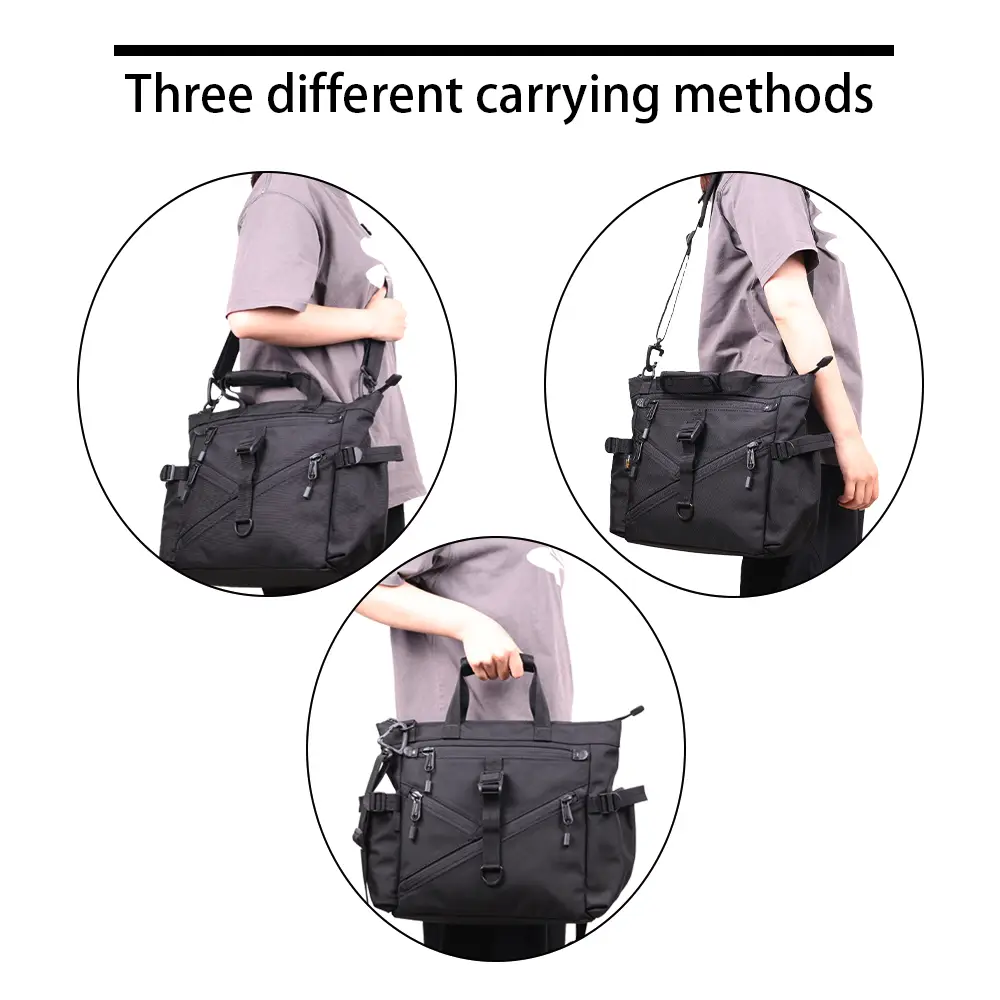
The larger CXN1153 measures 31.5 × 12.5 × 32 cm. Its wear-resistant fabric body has a top zipper, paired handles, exterior pockets, interior mesh storage and a fastening strap. Hand, shoulder and crossbody carrying are available. Within a waterproof camera bag project, those known structures give a proposed lining or cover specific openings and compartments to accommodate.
CXN1154 also has exterior side pockets, a rear slip pocket and a small zippered pouch on the strap. CXN1153 distributes storage across front and side pockets. For a proposed cover, those different locations introduce different access questions: which belongings remain inside the protected arrangement, and which openings would require the cover to be moved before their contents could be reached during active photography?
Barrier requirements guide ChangRong fabric and structure; color and logos remain customizable. The sealed lining and separate cover remain custom design options, rather than established standard fittings of these two bags. Their suitability needs examination in the chosen configuration, with the equipment layout and intended access kept in view throughout that review.
An internal barrier brings continuity and material joints to the foreground; an external cover brings deployment and retrieval into the decision. ChangRong can discuss either route in relation to the intended camera gear bag. A workable autumn photography specification connects the selected protection, its interfaces and the camera opening in one confirmed arrangement.