The smallest fishing bag is not necessarily the best choice. A waist pack can suit a short walk with a few lures, while a larger tackle format can support tools, personal items, and a wider day plan. At ChangRong, we help outdoor brands compare those use cases before selecting a fishing collection direction.
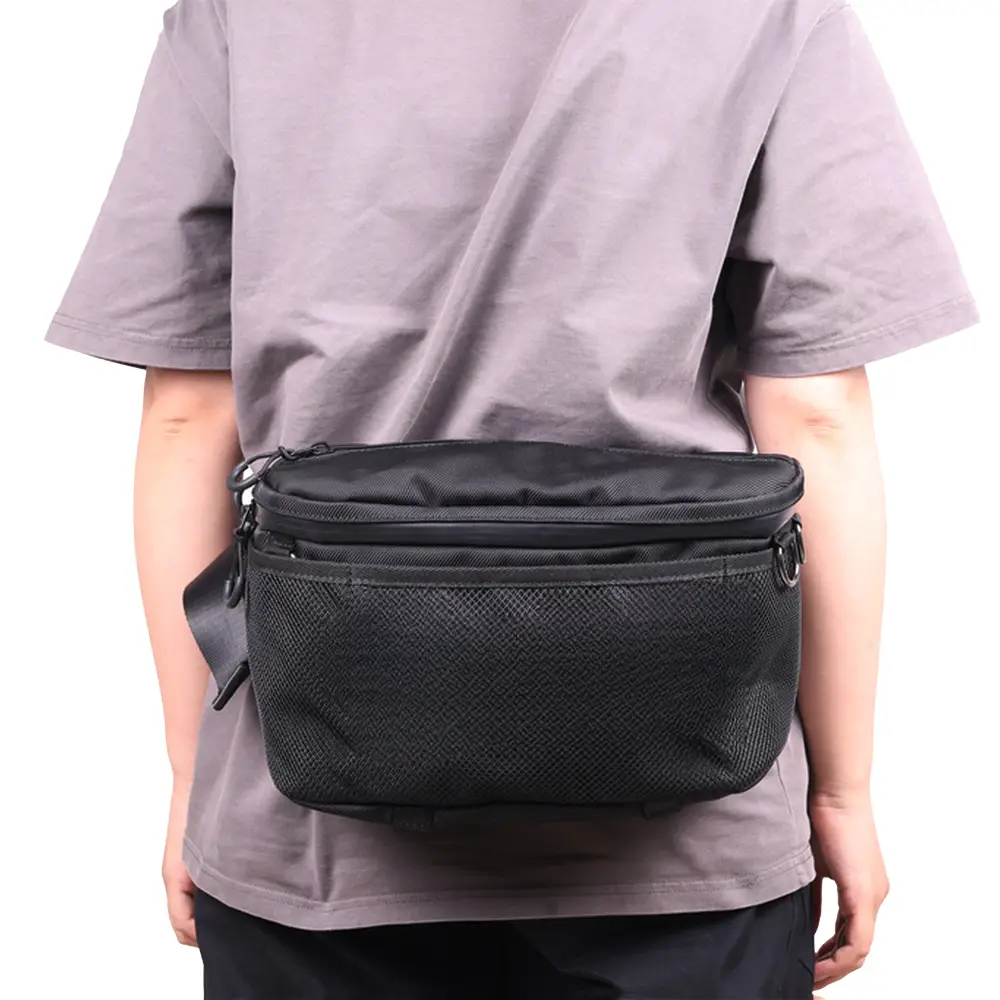
For the CXN1152, the product brief focuses on spacious storage, durable construction, and versatile freshwater and saltwater use. Its 31 × 14 × 18.5 cm dimensions give buyers a concrete starting point for comparing a compact fishing waist pack with a more organized fishing tackle bag.
Match the carrying style to the fishing scenario
A fishing waist pack is often associated with mobility. An angler can carry a small selection of lures, line, and tools while walking a riverbank or moving between shoreline spots. The compact format can appeal to customers who value quick access and a light load over broad storage.
A tackle bag serves a different situation. It gives more room for tackle, tools, and personal items when the trip lasts longer or involves several types of equipment. The CXN1152 is described as a practical men’s fishing bag with ample storage, making it suitable for anglers who need more than a few pocket-sized essentials.
Outdoor brands can offer both styles when their collection serves distinct users. A waist pack may fit an active lure-fishing line, while a compact tackle bag may suit weekend anglers, shore trips, and customers who prefer organized storage. The choice should follow the trip rather than a general preference for smaller products.
Merchandising can reflect that difference without creating a confusing range. A waist pack can be shown beside a short shoreline route, while the tackle format can appear with a full day’s equipment. Clear scenes help customers understand why one style sits close to the body and the other gives more room.
Compare capacity with movement and access
Capacity affects how a customer packs. A waist pack keeps the load close to the body and can make frequent movement feel simple. Its limitation is space: larger tools, spare tackle, and personal items may require careful selection or a second container.
The CXN1152 measures 31 × 14 × 18.5 cm. That size keeps it compact enough for outdoor movement while providing room for a planned set of fishing gear. The product description specifically highlights storage for tackle, tools, and personal items, giving brands a clear feature set to communicate.
Access also changes between the formats. A waist pack can place a few essentials close to the hands, while a tackle bag can separate a broader load into an organized carry system. For a brand, the decision depends on whether the product story centers on minimal movement or practical day-trip preparation.
Which style supports freshwater and saltwater ranges?
Water type can influence how much equipment an angler brings. A short freshwater session may call for a small lure selection and a few tools. A saltwater outing can involve a longer route, extra personal items, and gear selected for changing shoreline conditions.
The CXN1152 is suitable for various fishing scenarios, from freshwater to saltwater fishing expeditions. Its versatile positioning allows an outdoor brand to use one product concept across more than one category while keeping the core message focused on storage and durable outdoor construction.
The product has recorded more than 100,000 sales in Southeast Asian markets and carries a rating above 4.8 stars. Those figures provide commercial context for a tackle-focused design. A brand can discuss spacious storage, durability, and freshwater-to-saltwater versatility without adding claims beyond the product specification.
How production details affect a wholesale launch
Outdoor brands also compare styles through development timing and order structure. For the CXN1152 program, sampling takes 3 days, reorders take 7 days, and bulk production takes 25 days. The trial MOQ is 100 pieces, giving a buyer a defined starting quantity for testing a new fishing range.
Those milestones allow a team to plan sample reviews, product photography, online listings, and inventory windows. During sampling, buyers can assess the 31 × 14 × 18.5 cm dimensions, opening behavior, stitching, carrying balance, and storage arrangement before confirming bulk production.
Customization supports a distinct collection direction. Color, logo, fabric, and structure can be adjusted through OEM and ODM development. A brand may use a compact waist-pack concept for quick-access fishing, then apply a different structure to the CXN1152 when broader tackle storage is the priority.
This approach also helps a buying team sequence its launch. A smaller pack can test interest in a new fishing category, while a tackle bag can follow as a deeper storage option. Both products can share a visual language through coordinated color or logo treatment while serving different trip lengths.
Choosing the right format for your outdoor collection
The comparison becomes clearer when the customer and trip are defined. Choose a waist-pack direction when minimal carry, close access, and short sessions lead the product brief. Choose a tackle-bag direction when tackle, tools, and personal items need more room for a day beside the water.
The CXN1152 is not intended to replace every ultracompact waist pack or large boat-storage case. Its role is a focused fishing gear carry bag for outdoor use, with durable materials and a functional design for male anglers. Keeping that scope clear helps brands set accurate expectations.
ChangRong has more than 15 years of experience with lightweight convertible bags. We operate two factories with seven production lines and hold ISO, GRS, and BSCI certifications. For an outdoor brand comparing a fishing tackle bag with a waist pack, these production capabilities support a practical discussion about materials, structure, MOQ, and repeat orders.