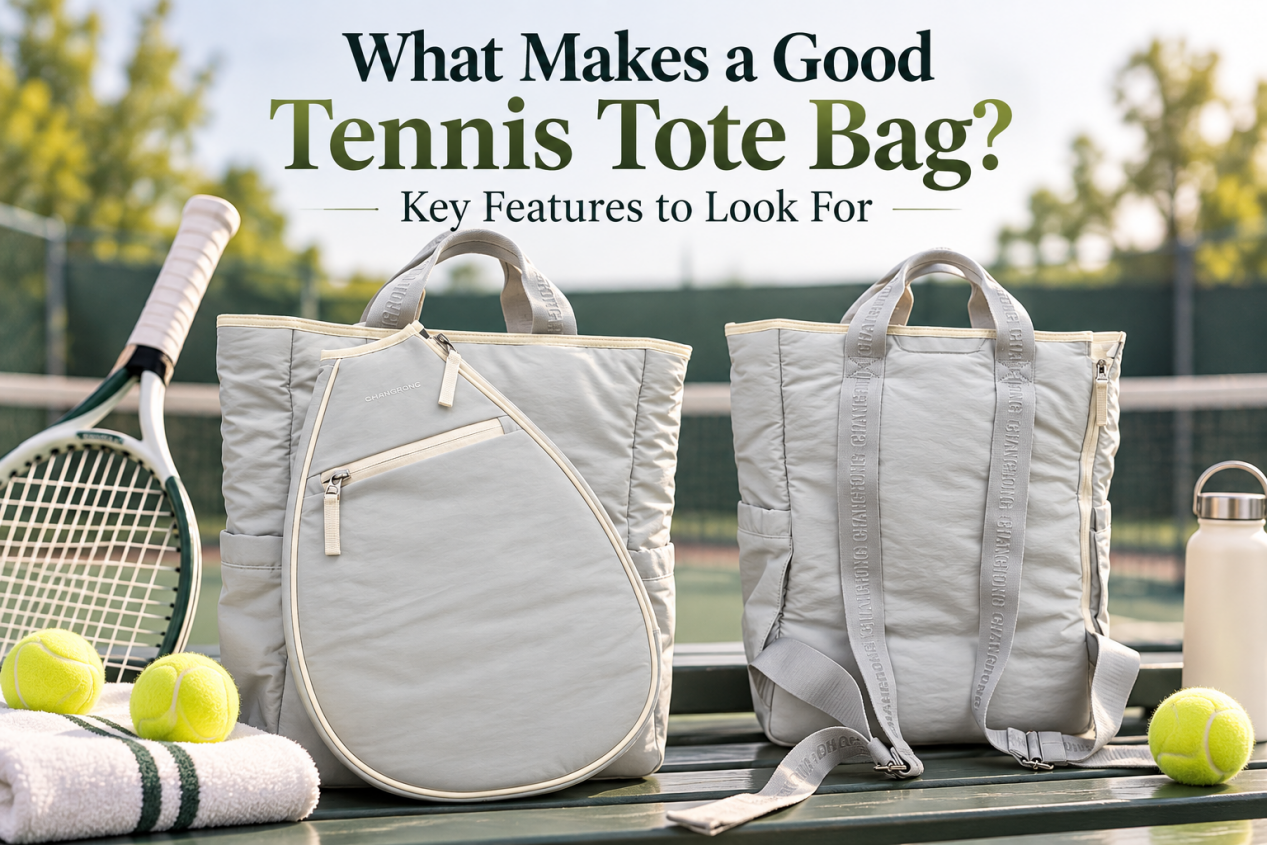
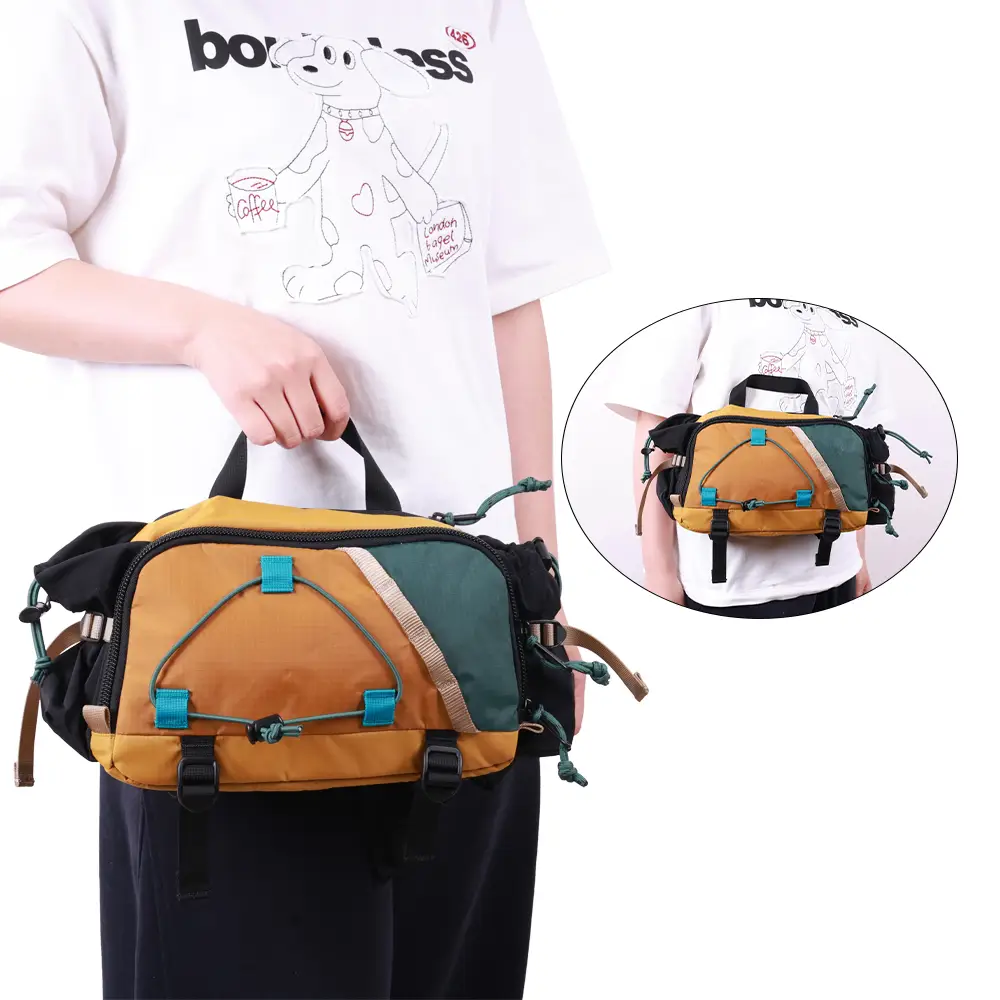
A customer reaches for a waist pack by its zipper pull, then notices the patch near the front pocket. Those small touchpoints can say as much about a brand as a large printed mark. At ChangRong, we help teams plan branding details around the bag’s size, carry position, materials, and production process.
The men’s 4L convertible waist pack measures 27.5 × 10 × 17 cm and converts between three carry positions—waist pack, fanny pack, and crossbody bag. As a custom waist pack intended for hiking, travel, commuting, and casual outings, the bag must keep each branding element clear while it moves between settings.
Start with a clear branding hierarchy
A waist pack has limited surface area. If the logo, patch, zipper pull, label, and color accents all compete for attention, the product can look crowded. Start by choosing one primary brand point, such as the front panel logo, then use smaller details to support it.
For example, a simple logo can sit on the front while a matching color appears on the zipper pull. A small patch can then carry a secondary message, such as a collection name or outdoor theme. This gives the eye a clear order instead of making every detail equally loud.
The pack’s compact body gives you a practical boundary. At 4L, it has room for a smartphone, power bank, keys, wallet, snacks, and a small water bottle, but not a wide advertising panel. A concise mark usually remains easier to recognize than a long slogan squeezed into a small area.
Use zipper pulls as a hand-level signature
Zipper pulls are handled repeatedly. A customer touches them while opening the compartment on a trail, boarding a bus, or reaching for a wallet at a market. That makes the pull a useful place for a small brand cue, even when the main logo is not facing outward.
When planning a zipper pull, consider how it feels with one hand. The shape should be easy to grip without distracting from the pack’s clean practical style. A color accent can connect the pull to the brand palette, while a subtle mark can reinforce recognition without covering the whole component.
The pull also needs to work with the bag’s water-repellent fabric and daily movement. The product is made with tough, tear-resistant fabric that protects belongings from light splashes and dust. Branding details should remain neat when the bag is opened often, carried across the body, or brushed against outdoor clothing.
Give patches and logos a stable visual home
A patch creates a stronger physical presence than a small printed mark, but its position matters. A front panel that stays relatively flat can provide a clearer area than a curved side section. If the patch sits near a strap anchor or a frequently compressed corner, its appearance may be harder to read during use.
Logo placement should follow the way the bag is worn. In waist mode, the front panel may face people walking beside the wearer. In crossbody mode, the logo may angle toward the side. A mark that looks balanced in one position can appear hidden in another, so review the design with the pack shown in all three carry options.
Our customization discussions cover color, logo, fabric, and structure. These choices should be recorded together in the approved sample. That record helps the production team keep the logo size, patch position, and color relationship consistent when the order moves from development into bulk manufacturing.
How should you place branding on a waist pack?
Begin with the customer’s actual viewing distance. A logo intended for a close-up product photograph can use finer detail than one expected to read across a commuter platform. For a compact bag, strong contrast and clean spacing often communicate better than extra decoration.
Next, check the branding against the contents and movement. The 27.5 × 10 × 17 cm body sits close to the waist or torso, so a large raised element may press against clothing. A small patch near the upper front panel may be easier to see and more comfortable than a bulky detail on the side.
It also helps to create one approved sample before confirming a larger run. ChangRong offers a 3-day sampling timeline, followed by a 25-day bulk production schedule. A sample review gives your team time to check logo scale, zipper pull handling, patch alignment, and the way the finished pack looks when worn.
Link branding choices to a practical launch plan
A branded waist pack should still serve the daily situations described in its product message. A hiker may need quick access to snacks and a phone. A commuter may carry a power bank and keys while keeping both hands free. A weekend traveler may switch from waist carry to crossbody carry while moving through a station.
The product has recorded more than 100,000 sales in Southeast Asian markets and carries a rating above 4.8 stars. Those figures provide useful market context, but the branding still needs to match your own audience. A technical outdoor label may choose restrained colors and a small patch, while a lifestyle collection may use brighter panels and a more visible front mark.
Keep the first specification focused. Confirm the main color, logo artwork, patch position, zipper pull direction, fabric, structure, packaging, and inspection points in one file. The product has a 100-piece trial-order MOQ, so a focused first run can make it easier to review customer response before adding more colorways or branding variations.
ChangRong has more than 15 years of experience with lightweight convertible bags, supported by two factories and seven production lines. Our team can review branding details alongside structure, material selection, sampling, mass production, and quality control. For an outdoor sports waist pack, the strongest result usually comes from a clear logo hierarchy, useful hand-level details, and a sample that reflects how customers will actually carry it.