Place two sample bags on a café table and the difference appears before either one is filled. Canvas brings a visible texture and a more structured hand. Synthetic fabric can create a smoother, lighter feel. For a lightweight messenger bag, that choice affects how the product looks, carries, and fits a retail collection.
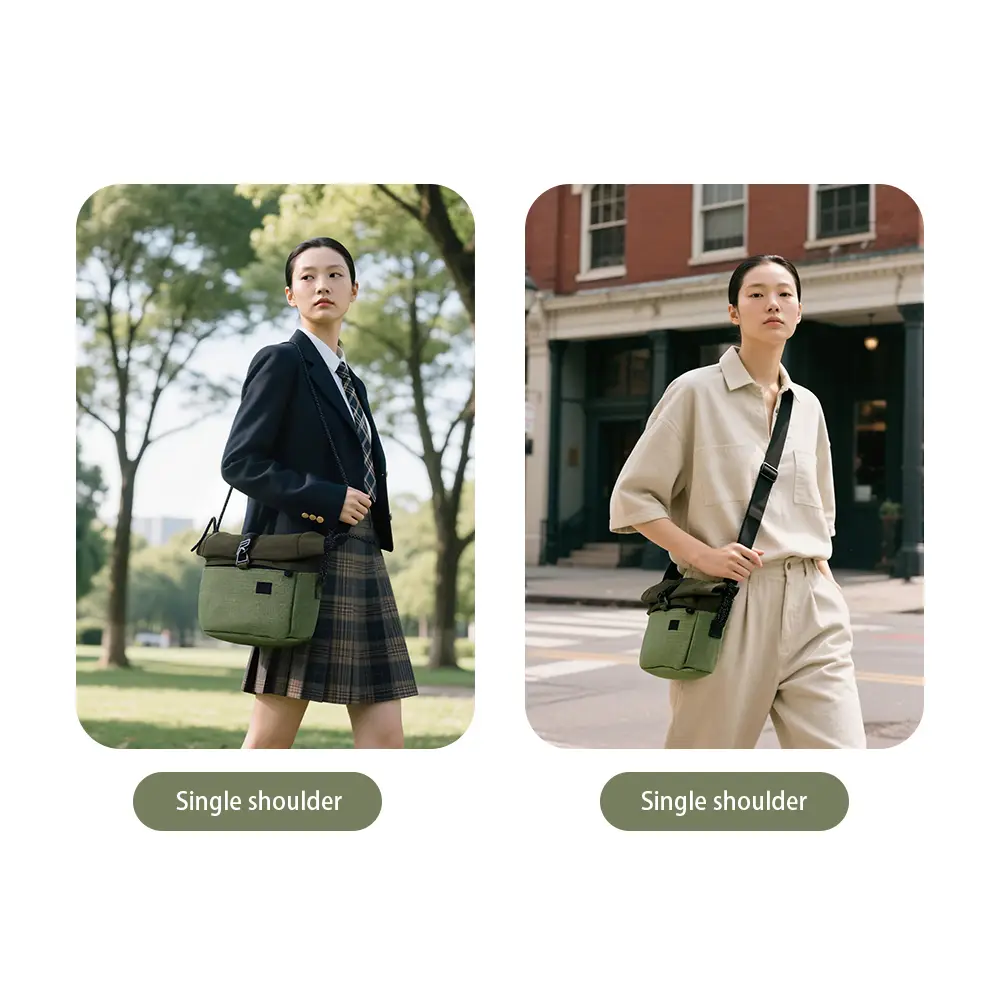
Our CXN1150 uses high-quality woven polyester described as tear-resistant and wear-resistant. It measures 25.5 × 10 × 30.5 cm, with an adjustable shoulder strap and buckle closure. Those facts give buyers a practical reference point for comparing a synthetic direction with a lightweight canvas alternative.
Compare the hand feel before comparing the marketing story
Lightweight canvas often gives a bag a dry, textured surface and a slightly more substantial feel in the hand. That character can suit heritage, workwear, or lifestyle assortments where fabric texture is part of the visual language. It may also make a compact bag feel more structured when it rests on a counter or hangs from a display hook.
Synthetic woven fabric offers a different presentation. Its surface can look cleaner and more uniform across a production run, which helps a brand coordinate several colors. On the CXN1150, the woven polyester body supports a casual outdoor style for men’s daily use while remaining suited to commuting, shopping, short trips, casual hiking, and weekend getaways.
The right answer depends on the shelf and the customer’s hand. If the product story depends on visible texture, canvas may deserve a sample round. If the range needs consistent color and a streamlined appearance, woven polyester may be easier to position. Touching both materials beside the same buckle and strap gives a clearer comparison than a fabric name alone.
Match abrasion needs with the daily carry scene
Material choice should follow contact points. A commuter may place the bag on a train seat, slide it against a desk, and lift it by the strap dozens of times in a week. A shopper may set it beside a metal basket. A weekend traveler may move it between a car seat and a hotel lobby. These scenes create different kinds of rubbing and handling.
The CXN1150 is described as using tear-resistant and wear-resistant woven polyester. That specification supports a synthetic direction for a bag that moves through regular city and casual outdoor use. Canvas can still be appropriate for a collection that accepts a more tactile surface and a slower, broken-in visual, but the sample should be checked around the base, side panels, strap attachment, and top edge.
This is a focused day-carry format, not a large hiking pack. The 25.5 × 10 × 30.5 cm size is intended for small essentials and a water bottle. Keeping the load within that format helps either material perform within the product’s intended scope.
Let structure and access guide the fabric decision
Fabric does not work alone. At ChangRong, the CXN1150 combines its outer body with an adjustable shoulder strap and a buckle closure. The strap lets the wearer set the carrying height, while the buckle supports quick access and secure storage for a phone, wallet, keys, and a water bottle.
Canvas can reinforce a structured, almost satchel-like presentation, while a synthetic woven body can support a softer, easy-moving silhouette. Neither choice replaces thoughtful panel design or a well-positioned strap. Ask how the bag opens, how it sits against the body, and how it looks when partially filled.
For a buyer, these checks connect fabric to merchandising. A canvas version may sit beside overshirts and heritage accessories. A synthetic version may fit an outdoor travel edit or a lightweight commuter range. The closure, strap, and dimensions should remain clear in both presentations so customers understand the same carry purpose.
Is synthetic woven polyester better for a lightweight messenger bag?
It can be a practical choice when a collection needs tear resistance, wear resistance, and a consistent casual appearance. The CXN1150’s woven polyester body is paired with a compact size and adjustable carry system, making it suitable for daily commuting, shopping, short trips, casual hiking, and weekend getaways.
The model has recorded more than 100,000 sales in Southeast Asian markets and carries a rating above 4.8 stars. Those figures give a buyer useful context for a synthetic material direction that already sits within a proven crossbody format. A canvas version may still make sense for a different visual range, but it should be tested against the same dimensions and carry scenes.
The useful comparison is not canvas versus synthetic in the abstract. It is textured hand feel versus uniform appearance, structured presentation versus easy movement, and collection story versus repeatable color execution. A material decision becomes clearer when those real retail dimensions are written beside the sample.
Turn the material choice into a wholesale program
Wholesale planning benefits from a defined product base. The CXN1150 supports a 100-piece trial order, with sampling in 3 days, reorders in 7 days, and bulk production in 25 days. A buying team can test a canvas or synthetic direction, review customer response, and then decide which finish belongs in a wider seasonal range.
Our factory team has more than 15 years of experience with lightweight convertible bags. We operate two factories with seven production lines and holds ISO, GRS, and BSCI certifications. At ChangRong, that production base supports review of fabric, strap adjustment, buckle installation, and finishing from sample through repeat orders.
For a wholesale messenger bag, we can customize color, logo, fabric, and structure. Start with the customer’s carry scene, compare canvas and woven polyester by hand and appearance, then keep the chosen material aligned with the 25.5 × 10 × 30.5 cm format. That process gives each collection a clear and manageable messenger bag direction.