5,900 square meters of combined factory space gives an OEM project room to move from sampling to repeat production. For a brand comparing suppliers, that number matters only when it connects to sewing capacity, quality systems, and communication. Our bag factory in China brings those elements together for customized bag programs.
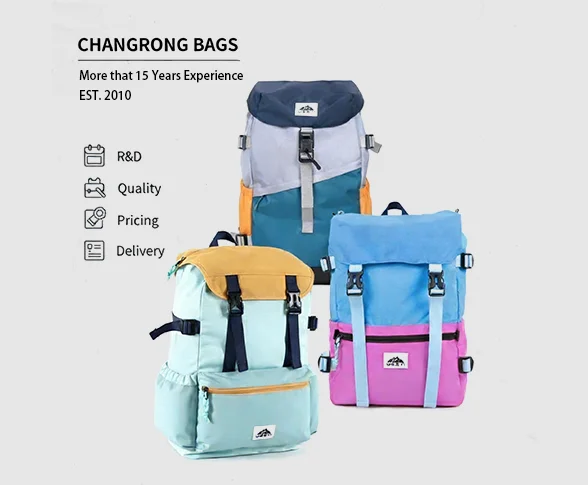
ChangRong was founded in 2010 and operates two factories with seven production lines. We support OEM, ODM, and private-label projects for buyers who need a manufacturing partner rather than a trading contact. The following checkpoints help you assess whether our setup matches your next collection.
Start with the factory’s actual production base
An OEM discussion becomes clearer when you can identify where development and production happen. Our two-factory structure provides a defined manufacturing base, while seven sewing lines support different bag programs moving through production. The combined 5,900 m² area gives space for materials, sewing operations, inspection, and packing activities.
This scale suits projects that begin with a focused sample and develop into a broader range. A buyer may start with one drawstring backpack, then add travel pouches or convertible styles after reviewing the first result. A physical production base makes those conversations easier to connect with actual capacity.
When you compare a China bag factory with a sourcing intermediary, ask who controls the sewing process, where quality checks take place, and how changes move from a specification to a finished item. Clear answers reduce uncertainty before a purchase order is issued.
Match OEM and ODM support to your design stage
Some buyers arrive with a complete tech pack. Others have a sketch, reference sample, target use, or material direction. Our OEM and ODM services support both starting points. You can bring a logo, color plan, fabric request, or structural idea, then discuss the construction details needed for production.
Customization is more than adding a mark after the bag is finished. It can involve color, logo placement, fabric, structure, pockets, closures, and the way the bag changes between carrying modes. A clear review at the beginning helps separate essential requirements from optional details.
For example, a commuter collection may prioritize a slim profile and organized storage, while an outdoor line may focus on a light construction and protection from rain or splashes. The factory conversation should follow the intended use instead of relying on a generic bag template.
Use sampling and lead times to plan decisions
The product development process includes a 3-day sampling period, a 7-day reorder lead time, and a 25-day bulk production lead time for the referenced bag program. These time points help buyers organize approvals, photography, launch planning, and inventory decisions around a realistic sequence.
A sample should answer practical questions before bulk production begins. Check dimensions, opening behavior, stitching, fabric hand, logo placement, and how the bag sits when filled with the intended items. For the CXN1094 drawstring backpack, the stated size is 42 × 9 × 49 cm, giving the review team a concrete reference.
The trial MOQ is 100 pieces. That quantity allows a buyer to test a new design or color direction with a defined first run before planning larger replenishment. Reorders and bulk schedules can then follow sales information and approved specifications rather than assumptions.
Verify systems, certifications, and export experience
Production capacity is only one part of supplier evaluation. Our company holds ISO, GRS, and BSCI certifications. These certifications provide recognized frameworks for quality, recycled-material practices, and social compliance within the manufacturing organization.
Export experience also affects the working relationship. Our products are shipped to more than 50 countries, so project discussions may involve different packaging expectations, delivery documents, labeling needs, and market preferences. Buyers can raise those requirements early instead of adding them after production planning is complete.
Ask for clear records during the project: approved artwork, material descriptions, size measurements, sample comments, and packing instructions. A shared record helps the production team follow the same version that the buyer approved. It also makes repeat orders easier to coordinate when a collection returns in a new season.
Select a partner that can support repeat programs
An OEM bag supplier should fit the full life of a product, not only the first quotation. Our company has operated since 2010, giving buyers a manufacturing relationship that can extend from initial development to repeat orders and new styles. The two factories and seven sewing lines support a wider production conversation than a single isolated sample.
For a buyer, the right fit depends on the project. A small trial may need a 100-piece MOQ and a clear sample timeline. A larger launch may need bulk scheduling, consistent materials, and coordinated packing. The same factory should be able to discuss both without losing sight of the approved product details.
Our bag factory in China can support custom color, logo, fabric, and structure choices through OEM and ODM development. If your next program needs a documented production base, recognized certifications, and defined sampling and lead-time points, these are practical criteria to review before moving forward.