What happens after a buyer approves a bag concept? Raw materials, color choices, trims, sewing details, and packing requirements all have to stay aligned. As a custom bag supplier, we organize OEM and ODM work around a defined factory base, documented requirements, and quality systems that support repeat production.
ChangRong was founded in 2010 and now operates two factories with seven production lines across 5,900 m² of combined space. For a buyer, those figures provide a starting point for evaluating how material sourcing and quality control can work together on a wholesale program.
Start sourcing with a clear material brief
Raw material control begins before purchasing. A project brief should identify the fabric direction, color reference, hardware, lining, logo method, structure, and intended use. Our OEM and ODM teams use these details to discuss construction choices before a sample is prepared.
That conversation matters because material decisions affect more than appearance. A drawstring backpack for outdoor use may require a different fabric direction from a fashion pouch or a commuting tote. A buyer who shares the use scenario gives the production team a better basis for matching materials to the finished product.
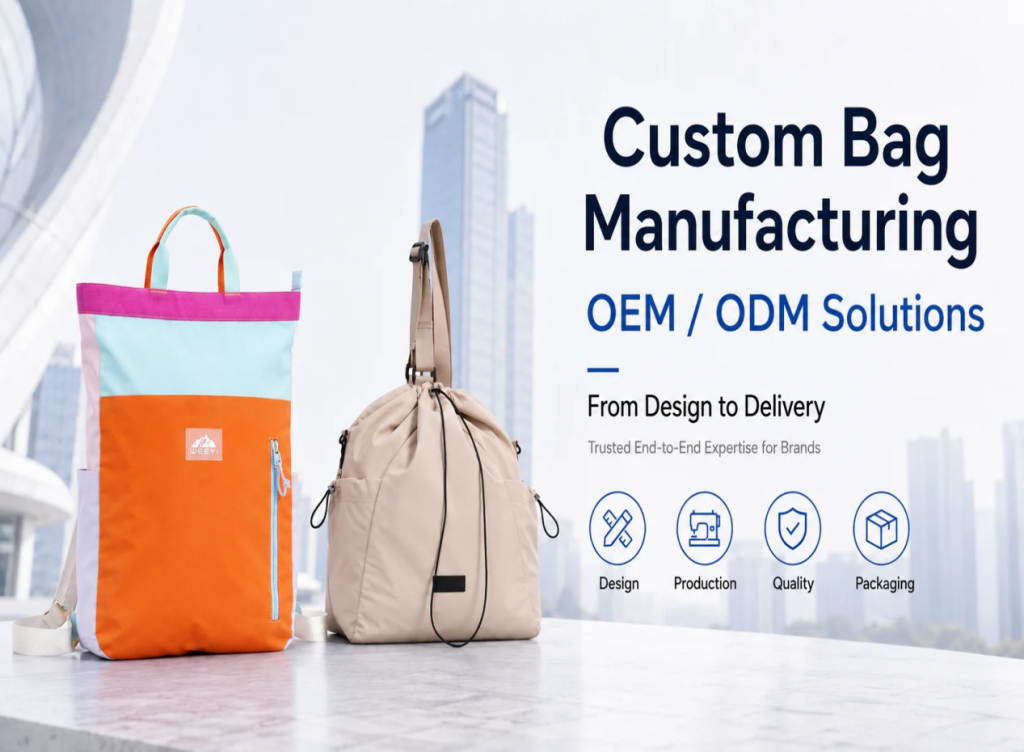
For example, the CXN1094 uses eco-friendly RPET material and a super-light construction. Its 42 × 9 × 49 cm format, drawstring opening, transformable function, and protection from rain or splashes form one connected specification. A material request should be reviewed alongside these functional requirements rather than handled as a separate purchasing task.
Keep approvals connected to incoming materials
A reliable sourcing process links approved references with the materials used in production. Buyers can keep color standards, fabric descriptions, logo artwork, measurements, and sample comments in one project record. That record gives both sides a common reference when a repeat order or a new color is discussed.
Our combined factory area of 5,900 m² supports the movement of materials through manufacturing activities, from preparation and sewing to inspection and packing. The physical setup does not replace communication, but it gives a project a defined place for production decisions and follow-up.
The same discipline helps with custom structures. If a buyer changes the drawstring length, pocket position, or fabric direction after sampling, the revision should be recorded before bulk work begins. Clear version control reduces confusion between an earlier sample and the specification approved for production.
How quality control follows the product specification
Quality control is easier to manage when it follows measurable product details. For the CXN1094, a review team can check the 42 × 9 × 49 cm dimensions, drawstring operation, transformable carrying function, RPET material, and waterproof protection for rain or splashes. These points give a sample and bulk inspection a practical structure.
The inspection focus should also reflect the intended use. A travel bag needs a clean opening, a comfortable carry shape, and materials suited to outdoor movement. A wholesale buyer can define which features are essential, which are visual preferences, and which variations are acceptable before production is scheduled.
Our seven sewing lines support the production of different bag programs. That capacity is most useful when each program has an approved specification and a clear inspection focus. It helps the factory team work from the same product requirements rather than relying on memory or informal descriptions.
Certifications and production records add accountability
Our company holds ISO, GRS, and BSCI certifications. These certifications provide recognized frameworks connected with quality management, recycled-material practices, and social compliance. Buyers can include certification requirements in their supplier review and keep the relevant records with the project documentation.
Export experience also shapes material and quality discussions. Our products are shipped to more than 50 countries, so buyers may need to coordinate labeling, packaging, documentation, and market-specific expectations. Raising these requirements before production helps the factory team align them with the approved bag design.
A reliable supplier relationship includes practical records: sample approvals, material descriptions, size measurements, artwork, packing details, and production timing. These records help both sides review what changed, what stayed the same, and what should be repeated in the next order.
Plan MOQ, lead time, and repeat orders together
The referenced bag program uses a trial MOQ of 100 pieces, with sampling in 3 days, reorders in 7 days, and bulk production in 25 days. These points help buyers arrange internal approvals, launch dates, inventory planning, and replenishment discussions around a defined schedule.
The first order is also a useful quality checkpoint. A buyer can review the sample, confirm the final materials, approve branding details, and test the finished bag in the intended sales channel. Once those points are settled, repeat orders can follow the same specification with fewer avoidable revisions.
ChangRong has more than 15 years of experience in lightweight convertible bags and supports OEM, ODM, and private-label development. Our wholesale bag supplier service includes custom color, logo, fabric, and structure choices. For buyers comparing suppliers, a clear material brief, traceable approvals, defined inspection points, and practical lead times provide a useful basis for a long-term program.