A bag can look neat on a shelf and still face hard contact on the first day out. It rubs against a train seat, a shop counter, a bicycle basket, or a trail railing. For our utility crossbody bag, fabric selection starts with ordinary points of contact.
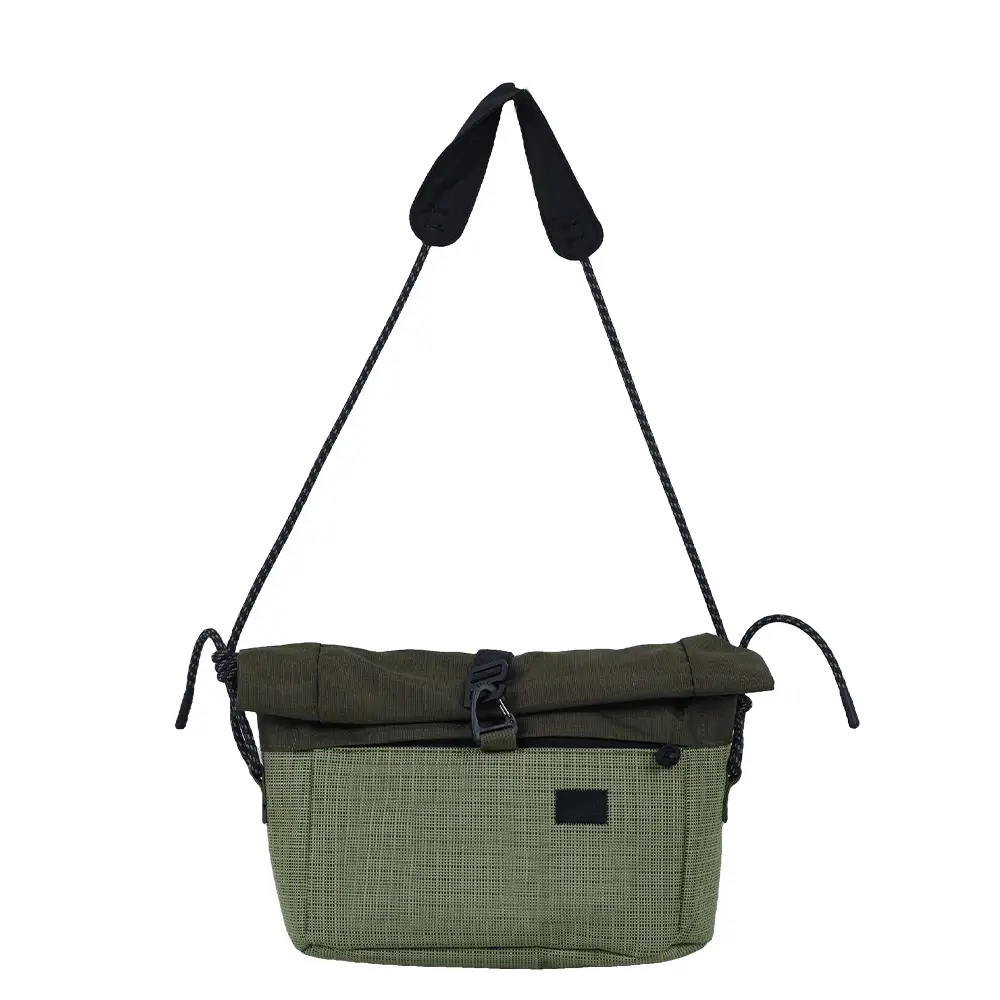
We use a high-quality woven polyester fabric for the CXN1150. The material is described as tear-resistant and wear-resistant, while the 25.5 × 10 × 30.5 cm format keeps the bag close to the body. That combination suits a light day carry for commuting, shopping, short trips, and casual outdoor use.
Begin with the abrasion scenes, not a fabric label
Abrasion is a use problem before it is a specification. A commuter may slide the bag across a platform bench. A shopper may place it beside a metal basket. A traveler may set it on a hotel floor, then pull it up by the strap. Each contact can scuff the outer surface or stress an edge, even when the bag is carrying only a phone, wallet, keys, and a water bottle.
The right fabric direction follows the routine. Woven polyester gives the CXN1150 a surface described for tear resistance and wear resistance. This makes sense for a bag that moves through city streets and casual outdoor settings rather than staying protected inside a larger suitcase.
For your own selection, write down the moments the bag will face. If the product is for daily commuting, look closely at the base, side panels, and strap connection. If it is for short travel, consider how often the bag will be packed, placed down, and lifted again. Clear scenes lead to clearer material decisions.
Match fabric performance with the bag’s working size
The CXN1150 measures 25.5 × 10 × 30.5 cm. This size gives a wearer room for small essentials and a water bottle without creating a bulky load. A close-fitting format also changes how abrasion happens: the bag brushes against the wearer’s side, chair backs, and narrow spaces rather than swinging like a large pack.
Size and fabric need to be reviewed together. A tightly filled bag can push outward on seams and corners. A lightly packed bag may fold or bend more often. With a defined working size, you can explain what the bag carries and select a woven material that supports that daily rhythm.
This is a focused day-carry bag, not a large hiking pack or protective case for heavy equipment. Keeping the contents within the stated format helps the fabric, buckle, and adjustable strap work within the product’s intended use.
Check the full surface system, not only the outer cloth
An abrasion-resistant outer fabric is one part of the bag. The contact points around it deserve the same attention. On the CXN1150, the buckle closure gives quick access while keeping belongings secured, and the adjustable shoulder strap lets the wearer change the carrying height. Those details affect how often the bag is pulled, shifted, and set down.
The woven polyester surface should support these repeated actions without changing the casual shape. A strap that sits comfortably can reduce unnecessary dragging. A closure that opens smoothly can limit rough handling around the top edge. Material choice becomes more useful when it works with access and carry details instead of being judged in isolation.
We also review the way the bag looks after ordinary movement. A minimalist style for men’s daily use needs to remain easy to pair with commuting clothes, travel layers, or casual outdoor clothing. Durability should support appearance, not turn the product into specialized technical gear.
Is woven polyester suitable for a utility crossbody bag?
For this product direction, woven polyester offers a practical balance between surface durability and everyday handling. The CXN1150 is described for daily commuting, shopping, short trips, casual hiking, and weekend getaways. Those settings call for a fabric that can cope with regular contact while keeping the bag comfortable to carry.
A custom messenger bag made with tear-resistant and wear-resistant woven polyester can be introduced as a dependable day companion, not as a waterproof expedition case. That distinction keeps expectations aligned with the actual use.
The model has recorded more than 100,000 sales in Southeast Asian markets and carries a rating above 4.8 stars. These figures add context for a compact crossbody format that has already been used in real commuting and outdoor scenarios.
Turn fabric selection into a consistent product experience
A material choice becomes stronger when every visible detail supports it. The bag’s 25.5 × 10 × 30.5 cm size, buckle closure, adjustable strap, and woven polyester body should appear together in product photography and copy. Show the bag beside a train seat, on a weekend walking route, or next to a small travel notebook. The scenes explain why abrasion resistance matters.
Our factory team has more than 15 years of experience with lightweight convertible bags. ChangRong operates two factories with seven production lines and holds ISO, GRS, and BSCI certifications. This production base supports consistent attention to fabric, structure, stitching, and finishing as a bag moves from sample to repeat production.
ChangRong can customize color, logo, fabric, and structure for a collection with a specific carry setting. Start with the contact points your customer will face, match the material to the bag’s working size, and keep the closure and strap details aligned. That process gives a practical abrasion-resistant crossbody bag a clear, honest place in everyday use.