An everyday-carry (EDC) backpack once communicated its purpose through visible utility: webbing, attachment points, multiple compartments, and rugged hardware. Today’s urban user often wants those capabilities without the tactical appearance. The evolution an hiding, refining, and reorganizing it around everyday life.
When EDC Meant Access Before Appearance
Early EDC-style thinking placed immediate access at the center of the design. Gear needed to remain organized and reachable, so exterior attachment systems and compartment-heavy layouts made practical sense.
That philosophy still influences the best EDC backpack for men today, but the visual language has changed. A commuter may carry a laptop, charger, headphones, documents, and personal items rather than specialized field equipment. The underlying requirement is similar: every item needs a logical place without forcing the user to empty the main compartment.
The difference lies in restraint. Modern designs increasingly integrate organization into the body of the backpack instead of displaying every functional element on the exterior.
The Shift From Tactical Utility to Everyday Carry
Urban EDC emerged as daily routines became more varied. One backpack might accompany a person on a commute in the morning, move through a café during the afternoon, and travel across town in the evening.
That change made excessive specialization less attractive. Users still value durability and organization, but they also expect the backpack to work with ordinary clothing and professional environments.
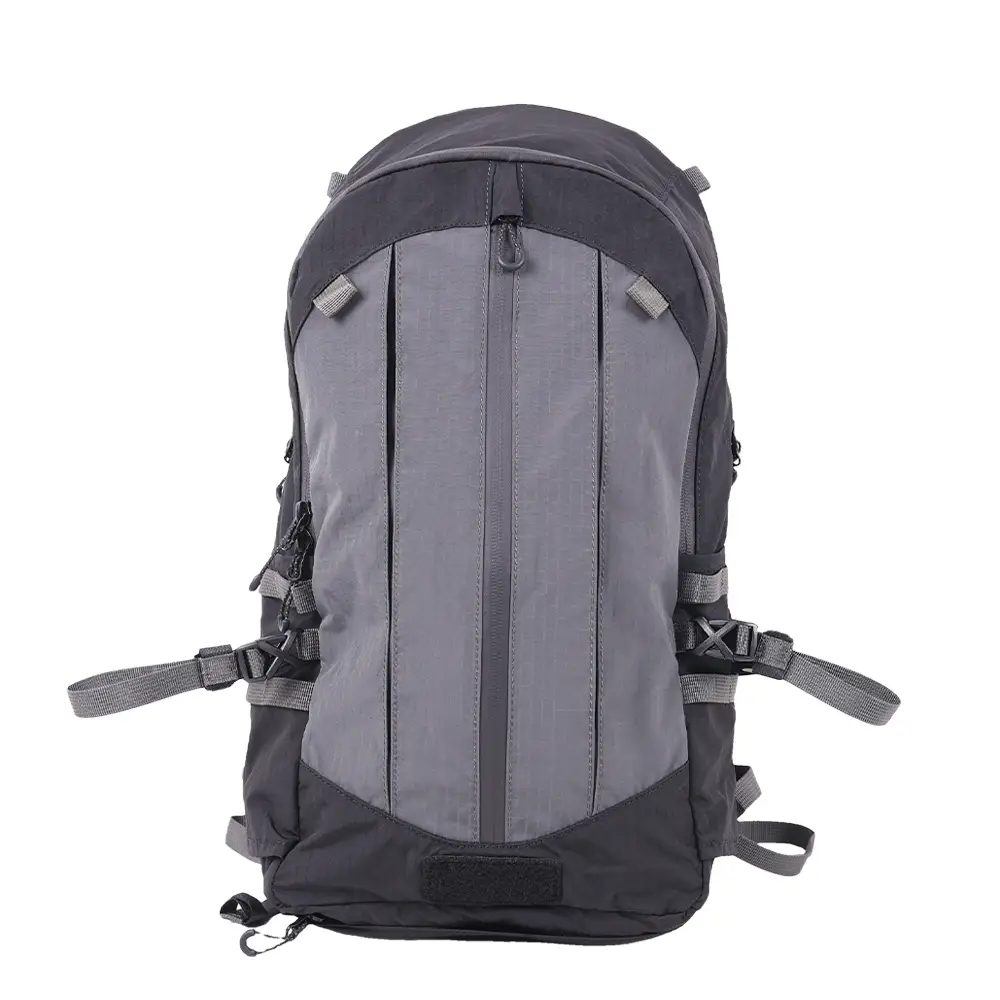
Our reference product illustrates this transition clearly. Its design combines a modular structure with a practical, transformable format intended for daily use, outdoor activities, and travel. Rather than presenting modularity as purely tactical equipment, the design treats flexibility as an everyday convenience.
Why Modularity Survived the Style Transition
Modularity remained relevant because people’s carry requirements change throughout the day. A fixed internal layout may work well for one routine but become inefficient when the contents change.
The contemporary urban EDC backpack therefore does not need dozens of external attachment points to remain adaptable. Internal organization, removable or adjustable elements, and flexible storage arrangements can provide much of the same functional value while producing a cleaner silhouette.
That principle also changes how we approach product development. Instead of adding features simply because they are associated with tactical equipment, we ask whether each feature improves the user’s actual carrying routine.
What Urban Users Actually Need From EDC Design
Urban EDC is fundamentally a problem of controlled organization. The backpack has to accommodate different item sizes while preventing the main compartment from becoming a single undifferentiated storage space.
A useful layout separates frequently accessed belongings from items that can remain packed. The exterior can stay visually simple while the interior performs most of the organizational work.
The physical proportions matter as well. Our referenced CXN1155 model measures 24 × 10 × 45 cm, giving a concrete example of a vertically oriented everyday backpack rather than an oversized tactical pack.
Designing One Backpack for Multiple Daily Roles
Good modern EDC designs do not assume that every user follows the same routine. Instead, they create enough flexibility for commuting, casual travel, and light outdoor use without turning the product into a specialized expedition pack.
Transformable construction is one way to achieve that balance. The referenced model uses a modular structure that supports different storage combinations, while its positioning covers daily commuting, outdoor activities, and travel.
For brands developing the best edc backpack for men, that flexibility can be more meaningful than simply increasing the number of pockets. A well-planned structure gives users reasons to keep the same backpack across several situations.
Where Minimalism Changes the Manufacturing Brief
Minimalism does not mean manufacturing a simpler product. In many cases, a cleaner exterior requires more deliberate construction because functional details have fewer places to hide.
We pay close attention to how compartments, reinforcement points, closures, straps, and modular components fit into the overall silhouette. The objective is to preserve practical storage without allowing functional hardware to dominate the product’s appearance.
Customization also becomes more controlled. The referenced product supports changes to color, logo, fabric, and structure, showing how a modular base can become a starting point for different brand directions rather than a fixed retail design.
The Modern EDC Backpack Is a Hybrid
The evolution of EDC backpacks is not a straight movement from tactical products to minimalist ones. Instead, useful tactical ideas have been absorbed into a more understated urban format. Accessibility became organization. Bridging two distinct design philosophies, the contemporary urban edc backpack serves as a natural meeting point.
ChangRong’s transformable modular backpack embodies this exact direction, blending adaptable storage compartments, everyday usability, and outdoor-ready performance into a single unified product concept. For brands creating gear for city dwellers, the takeaway is clear: true minimalism strips away visual clutter without ever sacrificing practical utility.