A zipper creates a convenient opening, but it also creates a potential path for rain and splashes to reach the contents of a backpack. The issue becomes more complicated in a modular design because multiple compartments and configurable storage areas can introduce additional openings and construction joints.
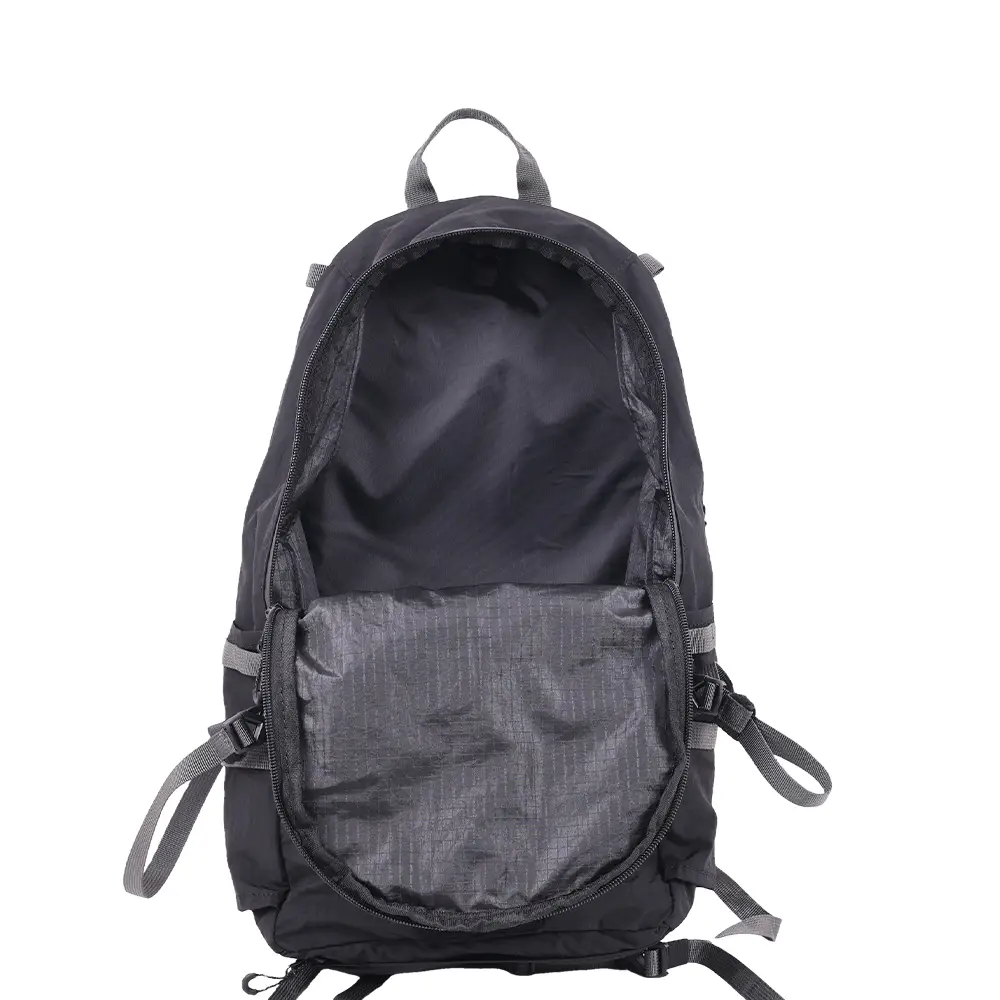
A zipper guard flap addresses this exposure by placing another layer of material over the zipper area. It does not automatically make a compartment waterproof. Instead, its value comes from changing how water reaches the closure and giving that water a less direct path toward the opening.
The Zipper Is an Exposure Point, Not Just a Closure
Water does not need to pass directly through the zipper teeth to become a problem. Rain can travel across the surrounding fabric, collect along an opening, or reach the zipper from an angle while the backpack is being carried.
The zipper therefore needs to be considered as part of the surrounding panel rather than as an isolated component. Fabric orientation, seam placement, zipper position, and the direction from which water is likely to arrive all influence the exposure.
A zipper guard flap places material over this vulnerable zone. Our modular backpack CXN1155 is designed around a transformable compartment structure for daily and outdoor use, making the relationship between compartment openings and surrounding construction particularly relevant.
A Guard Flap Changes the Route Water Takes
The basic function of a zipper guard flap is straightforward: create an overlapping barrier between the exterior environment and the zipper opening.
Instead of allowing water to approach the zipper along a direct line, the flap forces it to encounter another surface first. Gravity can then help move water away from the opening, provided the flap is positioned and shaped appropriately.
This distinction matters for a modular backpack. A flap should be treated as part of the water-management path rather than as a decorative strip covering the zipper. Its width, attachment position, overlap, and flexibility determine whether it actually remains over the closure during use.
A suitable zipper construction can therefore complement the modular design without interfering with the compartment’s intended access.
Modular Compartments Add More Places for Water to Enter
Modularity increases flexibility, but every additional compartment or configurable section requires careful attention to openings and attachment points.
A backpack designed around transformable storage may need several access areas rather than one large main opening. The CXN1155, for example, is described by ChangRong as having a modular structure that supports flexible storage combinations for daily, outdoor, and travel use.
For a backpack manufacturing project, this means water protection cannot be evaluated only at the main zipper. Each exposed compartment needs to be considered according to its position and intended contents.
A guard flap may be particularly useful where a zipper sits on an outward-facing panel. Interior-facing openings may have different exposure conditions and may not require identical construction.
Flap Geometry Determines Whether Protection Holds
A guard flap works only when it continues to cover the vulnerable zipper area during normal use. Excessive movement, insufficient overlap, or a poorly positioned attachment point can leave part of the closure exposed.
Width should therefore be considered alongside the zipper’s position and the direction of expected water flow. A flap that barely extends beyond the zipper may provide limited coverage if the backpack changes shape under load.
Flexibility matters too. The flap needs to follow the backpack’s surface without becoming so loose that it folds away from the zipper. Its attachment should also withstand repeated opening, closing, carrying, and packing.
For us at ChangRong, these relationships are resolved during product development rather than by treating the flap as an isolated accessory.
The Zipper and Flap Have to Be Developed as One Assembly
Adding a flap after the zipper construction has already been finalized can create conflicts. The flap may interfere with the zipper pull, reduce access, create excessive bulk, or introduce an additional seam in an inconvenient location.
A backpack manufacturing specification should therefore define the zipper, flap, seam allowance, reinforcement, and surrounding panel together. This is especially important for modular designs where compartments may be opened, repositioned, or used differently.
Material choice also affects the result. The flap needs to maintain its intended coverage while matching the behavior of the surrounding fabric. A stiff construction may protect the zipper but make access awkward; a very soft construction may move away from the closure too easily.
The objective is controlled coverage without sacrificing the compartment’s usability.
Water-Entry Testing Should Follow the Finished Backpack Structure
A zipper guard flap should be evaluated on a finished or representative sample, not only as an individual component. Packing changes the backpack’s shape, while carrying can alter how panels and flaps sit against each other.
Testing should focus on the actual zipper area and its surrounding seams. Check whether the flap stays positioned over the zipper, whether water can run underneath it, and whether the compartment remains protected under the intended use conditions.
A test should also examine neighboring modular sections. Water protection at one zipper is less meaningful if another exposed opening provides an easier route into the same storage area.
Treat the Zipper Guard as Part of a Water-Management System
Our development process supports customization of color, logo, fabric, and structure, allowing these construction details to be incorporated into the sample rather than treated as post-production modifications.
A zipper guard flap is therefore best understood as part of a layered water-management strategy. It does not replace appropriate zipper selection, seam construction, or material choices. Instead, it reduces direct exposure by placing a physical barrier over a vulnerable closure.
For brands designing a modular backpack, a practical approach is to develop the flap, zipper, surrounding panels, and compartment structure as an integrated assembly and evaluate it under representative use conditions. In this way, what was formerly an ornamental cloth strip becomes a functional water-resistance quality.
Where modularity, material choice, and construction details are all taken into account simultaneously, ChangRong may include such structural requirements in the production of bespoke backpacks.