A commuter bag has to solve a peculiar design problem: people want enough room for an unpredictable day, but they do not want to carry that extra volume on every trip. An expandable commuter backpack addresses the problem by storing additional depth inside a controlled construction rather than making the entire body permanently large.
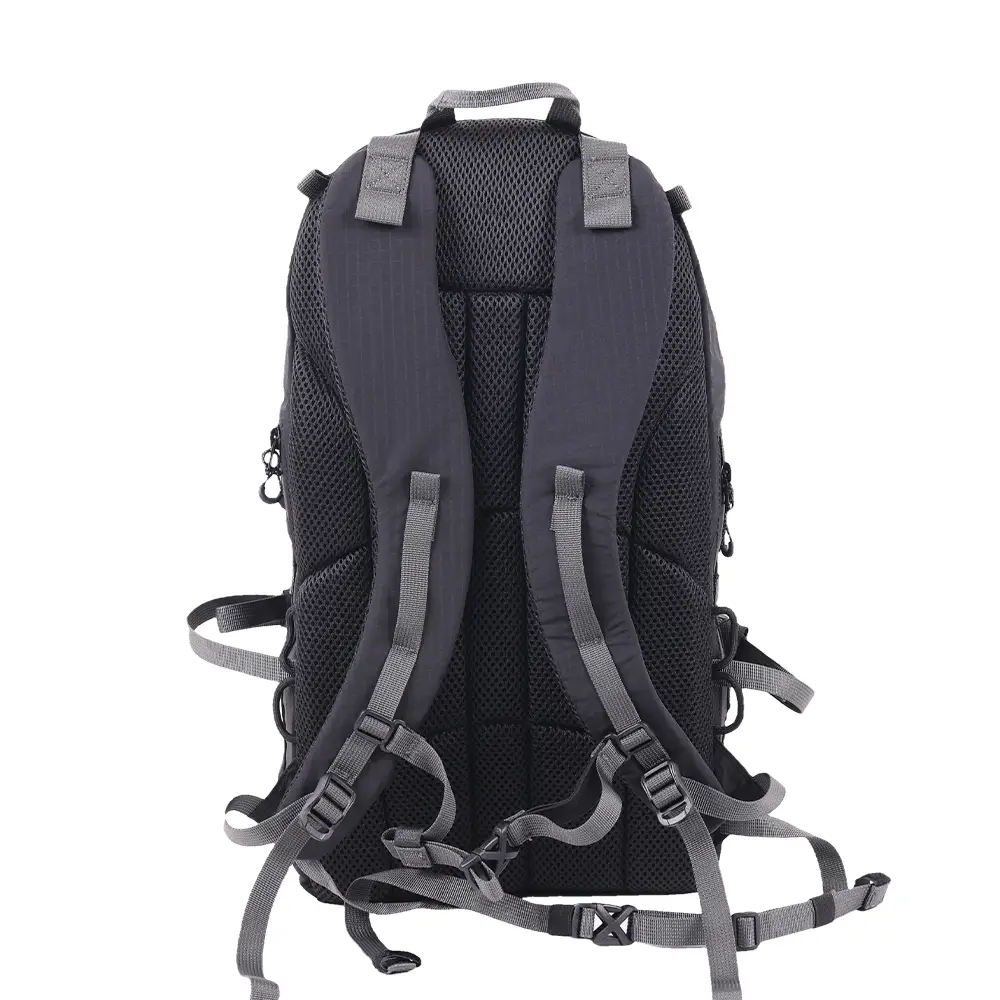
The compact appearance does not happen simply because a zipper is added. Pattern geometry, gusset placement, fabric behavior, base construction, and internal support all determine whether the bag looks genuinely slim or merely underfilled. We approach the design as a volume-management problem, where unused capacity must remain visually restrained.
The Hidden Volume Starts With the Gusset
Expansion normally comes from a gusset that becomes active when its retaining zipper is opened. A patent describing zipper expansion for backpacks explains the basic mechanism: closing the zipper restrains the gusset, while opening it allows the side structure to enlarge the available storage volume.
That distinction matters because the bag does not need a permanently deep main compartment. Instead, the pattern reserves additional material around a controlled expansion zone. In the closed state, that zone occupies very little visible depth; after release, it contributes additional space to the main body.
We use this principle when developing an expandable backpack because the expansion mechanism must be integrated into the bag’s pattern from the beginning. Adding an expansion zipper after the main silhouette has already been finalized usually creates compromises around seams, lining, and panel alignment.
Folding Geometry Keeps Excess Material Out of Sight
A slim empty profile depends heavily on where the unused gusset goes. Rather than leaving surplus fabric loose inside the bag, the construction should guide it into a predictable folded position between the shell and lining or within the expansion zone.
Gusset geometry therefore affects both states of the product. A poorly controlled fold can create visible ridges, bunching, or uneven thickness when the bag is closed. A controlled fold keeps the external panels closer together and makes the compact state look intentional.
The fold does not have to disappear completely; it needs to remain subordinate to the main silhouette. Hidden or visually integrated expansion construction can preserve a cleaner exterior while retaining additional capacity.
How Zipper Placement Influences Capacity and Silhouette
An expansion zipper is not merely an opening device. Its position determines where the bag gains depth and how the surrounding panels behave when the zipper is closed.
A perimeter or strategically positioned zipper can restrain the gusset so the body returns to its compact configuration. Once released, the same construction permits the gusset to unfold and create additional internal space.
Our development work treats zipper placement as part of the silhouette rather than an isolated hardware decision. The zipper tape, seam allowance, gusset width, and neighboring panels have to work together. Otherwise, the closed bag may show waviness even though the expansion function technically works.
Structure Prevents a Slim Bag From Collapsing
A thin empty backpack should look compact, not shapeless. The back panel is particularly important because it forms the interface between the user’s body and the changing volume of the main compartment.
Internal support can keep the rear panel stable while the expandable section changes depth. The base deserves similar attention. Once the bag expands, additional depth changes how the load sits, so the bottom needs enough structural control to prevent the body from simply folding downward.
Reinforcement around the lower part of the expansion area can also help the bag maintain a more controlled form. Expansion cannot be considered separately from the panels and support structure that contain the added volume.
For a commuter product, we would normally prioritize a stable back panel and controlled base before adding decorative expansion details. The objective is simple: the bag should retain its designed proportions whether the expansion is closed or open.
Sampling Reveals Whether the Closed Profile Works
Digital patterns can suggest the intended silhouette, but physical samples expose problems that drawings may hide. We inspect the bag completely empty, lightly loaded, and fully expanded because each state reveals a different construction issue.
An empty sample can show whether the folded gusset creates unwanted thickness. A lightly loaded sample indicates whether everyday contents cause premature expansion or distortion. A fully expanded sample shows whether the additional depth overwhelms the original proportions.
At ChangRong, we treat the sample as a functional test rather than merely a visual approval stage. The expansion should operate smoothly, the panels should remain aligned, and the compact configuration should still resemble the intended commuter product.
Repeated opening and closing should also be checked during development. A design may look clean in one position but gradually lose its intended shape if the folded material does not return consistently to the correct position.
How to Keep an Expandable Backpack Slim When Empty
An expandable backpack stays slim when its extra volume is deliberately controlled through the gusset, folding geometry, zipper placement, panel structure, and base construction. The goal is not simply to add capacity, but to determine where that capacity goes when it is not being used.
At ChangRong, we integrate the expansion mechanism into the bag’s overall construction and validate both the compact and expanded configurations through physical sampling. When the gusset folds cleanly, the panels remain stable, and the base supports both configurations, the bag can provide extra room without looking oversized when closed.