A men’s commuter backpack is not simply a compact version of a standard daypack. Its shoulder straps need to match the target wearer’s shoulder dimensions, while the back length must correspond to the wearer’s torso rather than the bag’s overall height. The difficult part is coordinating those dimensions without sacrificing capacity or freedom of movement.
It would be best to begin with the connection between the torso and the harness. The straps’ proper placement, the distance between their attachment points, and the amount of vertical adjustment required by the back system would be determined rather than an existing pattern being shrunk. Based on that choice, the bag’s shape, strap anchors, and even how it bears its daily burden are all defined.
How Shoulder Dimensions Influence Harness Placement
Shoulder width affects the position of the entire harness. Moving the straps inward can make a pack feel more appropriate for a narrower frame, but simply reducing their spacing is not enough. The upper ends, curvature, padding, and lower attachment points must still create a natural path over the shoulders.
For a men’s commuter backpack, the harness should therefore be developed as a connected shape rather than two independent padded strips. A strap that begins too far outward may rub against the arm; one positioned too close to the neck can interfere with comfortable movement. We would evaluate the strap angle together with the width of the upper back panel.
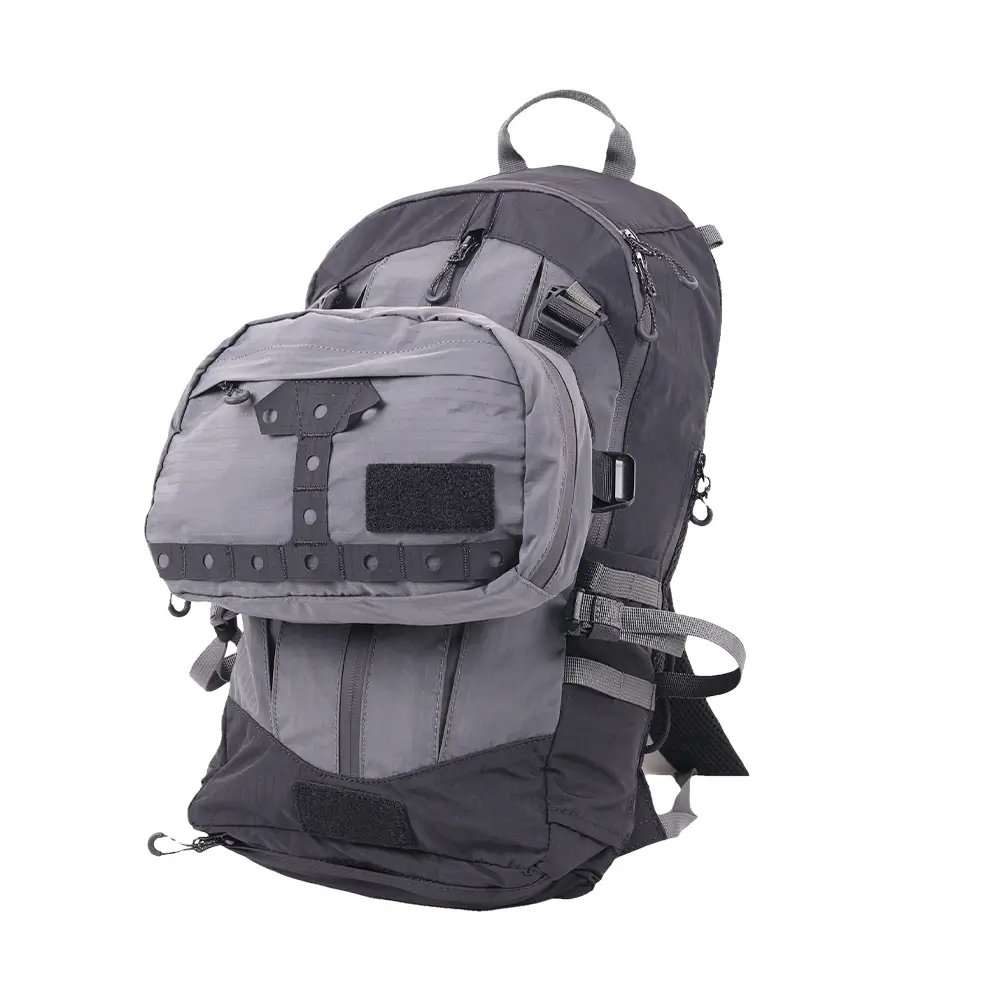
The ChangRong camera bag features a modular design with customizable compartments and supports customization of color, logo, fabric, and structure. This flexibility allows brands to adapt the bag to different equipment configurations, functional requirements, and market preferences. That flexibility makes the harness and back construction design variables rather than fixed features.
How Torso Length Influences Vertical Fit
Shoulder width controls the horizontal relationship, but torso length determines where the backpack sits vertically. A pack can have correctly positioned straps and still feel wrong if its body extends too far below the wearer’s back or places the upper attachment point too low.
The useful torso length would be deducted from the bag height. Even if there needs to be enough room for a commuter design, the portion against the body shouldn’t go longer only because the main compartment is taller. Alternatively, capacity can be structured according to depth, location of compartments, or regulated growth.
The back panel, shoulder-strap attachment, load-bearing area, and bottom structure should therefore be reviewed as one vertical system. Changing one dimension can shift the load relationship and alter how the bag moves.
How to Set the Backpanel Geometry Before Adding Compartments
Brand graphics and compartment layouts are easy to visualize, but fit requires a different discipline. The back panel should establish the base geometry before decorative panels and storage features are positioned.
Prior to settling on pocket locations, we would designate attachment zones. A laptop compartment not only increases capacity, but its placement also determines the placement of heavier items. It is important that the modified torso arrangement can still handle the load.
The same principle applies to modular features. The product uses a transformable structure and flexible storage combinations for daily use and outdoor activities. For a men’s commuter backpack, those concepts can be retained while the harness geometry is redesigned around the intended fit rather than copied from a men’s pattern.
Sampling Should Test Dimensions in Combination
Fit problems rarely come from one measurement alone. A strap may have the right width but the wrong angle. A back panel may have the intended length but excessive stiffness. An adjustment system may provide enough travel but place its hardware where the user cannot easily reach it.
That is why a custom backpack manufacturer should evaluate the first sample as a complete geometry. We would check strap spacing, attachment height, lower anchor position, back-panel length, and adjustment travel together. Testers should also carry representative commuter contents rather than an empty shell.
The purpose is to identify which dimensions need to move before the pattern becomes expensive to revise. Strap anchors and panel proportions can then be changed while construction remains flexible.
Convert Fit Decisions Into a Repeatable Specification
Once the intended fit has been established, the measurements need to become production instructions. A useful specification should record the target torso configuration, strap geometry, adjustment range, attachment locations, padding construction, and the relationship between the harness and back panel.
For ChangRong, this translation is particularly relevant to customized development because the referenced backpack supports changes to fabric and structure as well as appearance. A custom backpack manufacturer needs those changes defined precisely enough that a revised sample does not gradually drift away from the approved fit.
Differentiating between fixed and flexible dimensions is our goal. Simplifying manufacturing and fitting is possible by controlling the core back-panel shape while offering adjustability for the harness.
Design Shoulder and Torso Fit as One System
Shoulder width and torso length should not be solved independently. Shoulder spacing controls the horizontal harness position, while torso length controls its vertical position. Together, they establish the carrying geometry. With this relationship in mind, ChangRong approaches the construction of customised backpacks. The goal is to change the physical pattern such that it better fits the body.
Before designing a harness for a men’s commuter backpack, manufacturers should determine the ideal shoulder-to-torso ratio and torso length, incorporate these measurements into the pattern, and then test the loaded sample to ensure it fits properly. Rather than relying on superficial reduction in size, this method generates a fit choice grounded on geometry.