A photographer does not experience a camera bag as a collection of materials and hardware. They experience a sequence of movements: reach for the flap, release the closure, lift the cover, find the camera, and close the bag again. If the fastening system demands too much precision at any point, access becomes slower than the bag’s appearance suggests.
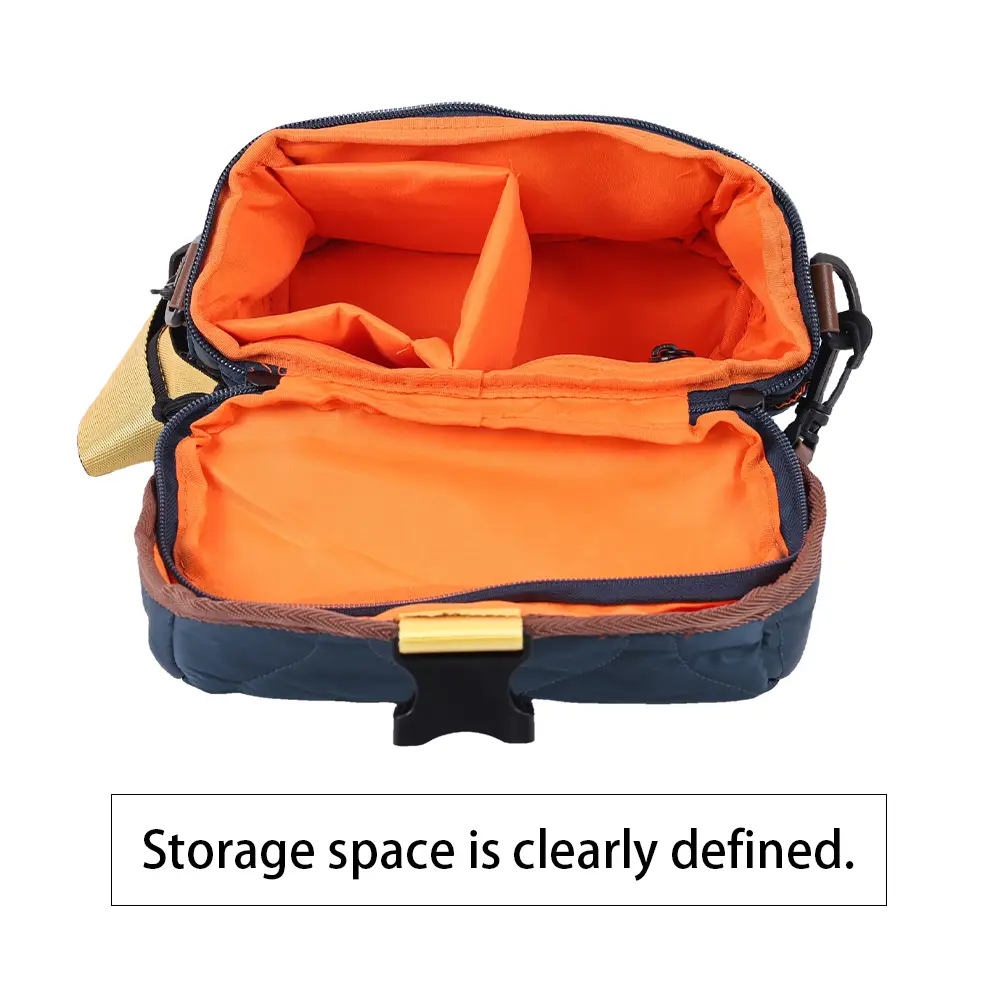
Magnetic buckles change that sequence by helping the closure locate itself. Instead of requiring the user to manually align two fastening parts before securing the flap, magnetic attraction can guide them together. The same principle can simplify the release motion, making the difference most noticeable when a camera needs to be reached repeatedly.
A Camera Flap Can Be Slower When Opening Requires Two Hands
Traditional buckle systems often separate opening into distinct physical actions. One hand stabilizes the bag while the other finds the fastening point, releases the mechanism, and moves the flap out of the way.
That sequence is not necessarily a problem for a bag that is opened occasionally. Camera carrying is different. A photographer may need to check equipment, change lenses, or take a camera out several times during one outing.
The closure therefore becomes part of the shooting workflow. Every additional manipulation adds friction between noticing a photographic opportunity and actually getting the camera into position.
A shoulder bag also moves differently from a backpack. It can be pulled toward the body with one hand while the other operates the flap. Closure hardware that accommodates this movement can make access feel substantially more direct.
Magnetic Buckles Remove the Alignment Step
The defining advantage of a magnetic closure is attraction between mating components. As the two parts approach one another, the magnetic force helps bring them into the correct relative position.
That matters most during closing, but it also influences the overall opening experience. The user does not have to manipulate a small fastening component through a precise mechanical path before the flap can be secured again.
Magnetic snaps are widely used in bags because they allow relatively simple engagement, while magnetic buckles can combine magnetic alignment with a mechanical retention feature. Those are different constructions, and the distinction matters when specifying hardware for photography products.
The mechanism therefore saves more than a fraction of a second. It can reduce the number of deliberate hand movements required to complete the closure cycle.
The Real Speed Gain Happens at the Moment the Flap Releases
Opening speed is often misunderstood as a measurement of how quickly the magnet separates. That is only one part of the movement.
A useful camera shoulder bag needs the flap to move away from the compartment immediately after release. If the closure disengages quickly but the flap remains stiff or folds awkwardly across the opening, the photographer still has to perform another maneuver before reaching the camera.
Magnetic hardware works best when release and flap movement are coordinated. A light, controlled pull should separate the closure, while the flap construction should allow the opening to become accessible without excessive repositioning.
That is why simply choosing a stronger magnet does not automatically produce faster access. Hardware force and textile construction have to be considered together.
A Magnetic Closure Can Be Fast Yet Still Hold the Camera Securely
Speed cannot come at the expense of keeping equipment inside the bag. A camera compartment must remain sufficiently closed during walking, bending, and normal shoulder movement.
The closure therefore has two opposing jobs. It should release readily when the photographer deliberately opens the bag, yet remain engaged while the bag is being carried.
The surrounding flap contributes to that balance. Overlap, fabric stiffness, hardware placement, and internal organization can all influence how easily the closure separates and how well the flap stays positioned.
For our camera designs, we look at the closure as part of the equipment-protection system rather than treating the buckle as an isolated accessory. The camera should remain contained even though the photographer can reach it without a complicated opening sequence.
How Flap Tension Affects Magnetic Closure Performance
One overlooked variable is the amount of force the flap itself places on the closure. A heavily structured flap may resist movement after the buckle has been released. A loose flap may move easily but fail to sit precisely over the compartment when closed.
Hardware placement changes the experience too. If the magnetic components sit too far from the natural closing line, the user may need to pull or reposition the flap before the attraction becomes effective.
During OEM development, we pay attention to these relationships. The objective is not maximum magnetic force. It is a closure that reaches its engagement zone naturally and releases without making the photographer fight the flap.
How to Evaluate Whether a Magnetic Camera Flap Opens Faster
We do not judge opening speed from a product drawing. A prototype tells us whether the mechanism works once the actual fabric, lining, padding, and hardware are assembled.
Our evaluation starts with repeated opening and closing. We observe whether the user can release the flap smoothly with one hand, whether the magnetic parts find each other without deliberate alignment, and whether the flap clears the camera compartment quickly enough for practical access.
Loaded testing is equally useful. A bag behaves differently when carrying a camera and accessories than it does when empty. Shoulder position, compartment pressure, and the weight distribution of the contents can change the way the flap moves.
ChangRong uses this type of prototype evaluation because a magnetic buckle’s specification alone cannot describe the complete user experience.
Designing the Closure Around Real Photography Movements
The strong reason to use magnetic hardware is not that it makes a camera bag look more advanced. It is that the closure can be designed around how photographers actually move.
A street photographer may want to open the bag while standing and keep one hand available for the camera. A commuter carrying photography equipment may value quick access during short stops. Someone using a camera bag for ordinary daily activities may care equally about uncomplicated closing after the camera has been retrieved.
Our reference camera bag combines photography and daily-use positioning, making this type of closure logic particularly relevant. The bag needs to transition between access and secure carrying without forcing the user through a lengthy fastening sequence.
For brands developing a camera shoulder bag, the useful question is therefore not simply whether magnetic buckles are faster. It is whether the entire flap has been designed so that magnetic release leads directly to usable camera access.
Integrate Magnetic Hardware Into the Closure System
That is also what we consider when working as a private label bag manufacturer. Hardware, flap construction, compartment geometry, and user movement have to cooperate.
When looking for the best camera bag for everyday use, magnetic buckles provide a major advantage for fast-paced shooting, smoothing out the daily routine of opening and closing compartments.
At ChangRong, we treat these closures as a functional upgrade rather than a cosmetic trend. A magnetic buckle belongs on a bag only if it streamlines hand movement, releases predictably, and grants quick access without risking gear containment.