A breathable back surface is not created simply by sewing mesh onto a bag. For a crossbody design, the contact zone moves across the torso, pressure changes as the load shifts, and heat can accumulate beneath both the bag and strap. If moisture stays against the body, sweat marks can become a visible problem on clothing and can also make carrying feel clammy. We design the backing as a controlled interface between the wearer and the equipment rather than treating it as decorative fabric.
Map the Contact Zone Before Choosing the Mesh
The first decision is where the bag actually touches the wearer. A compact camera bag does not sit like a backpack. Its body may rest against the side or rear torso while the strap creates a separate pressure line across the shoulder and chest. That means one continuous mesh specification may not address every sweat-prone area.
We start by mapping the stable contact surface, the edges that lift away during movement, and the locations where the bag presses harder when equipment is loaded. ChangRong’s reference camera bag uses an adjustable shoulder/crossbody configuration, so fit can change with strap adjustment. That makes contact mapping more useful than selecting mesh from the front appearance alone.
A practical pattern should leave room for airflow where the body is most enclosed. Research on backpack interfaces similarly recommends breathable fabrics and structural features that create air channels while maintaining support.
Build Airflow Into the Backing Instead of Relying on Surface Mesh
Mesh works well when air has somewhere to move. A flat layer placed directly against a broad fabric panel can still feel warm because there is little space for air exchange. We therefore consider the relationship between mesh, foam, seams, and the underlying shell.
Spacer or air-mesh constructions can create a small separation from the main body. Some camera bags use ventilated foam beneath open mesh, while other designs combine mesh with shaped channels. These structures are intended to reduce full-surface contact and encourage evaporation rather than simply making the back look porous.
For a smaller crossbody format, excessive thickness can be counterproductive. It can enlarge the profile, alter how the bag hangs, or add unnecessary weight. We prefer a shallow ventilation structure that follows the bag’s existing shape. The goal is not maximum padding; it is enough separation to reduce trapped heat without compromising stability.
Separate Ventilation and Camera Protection Functions
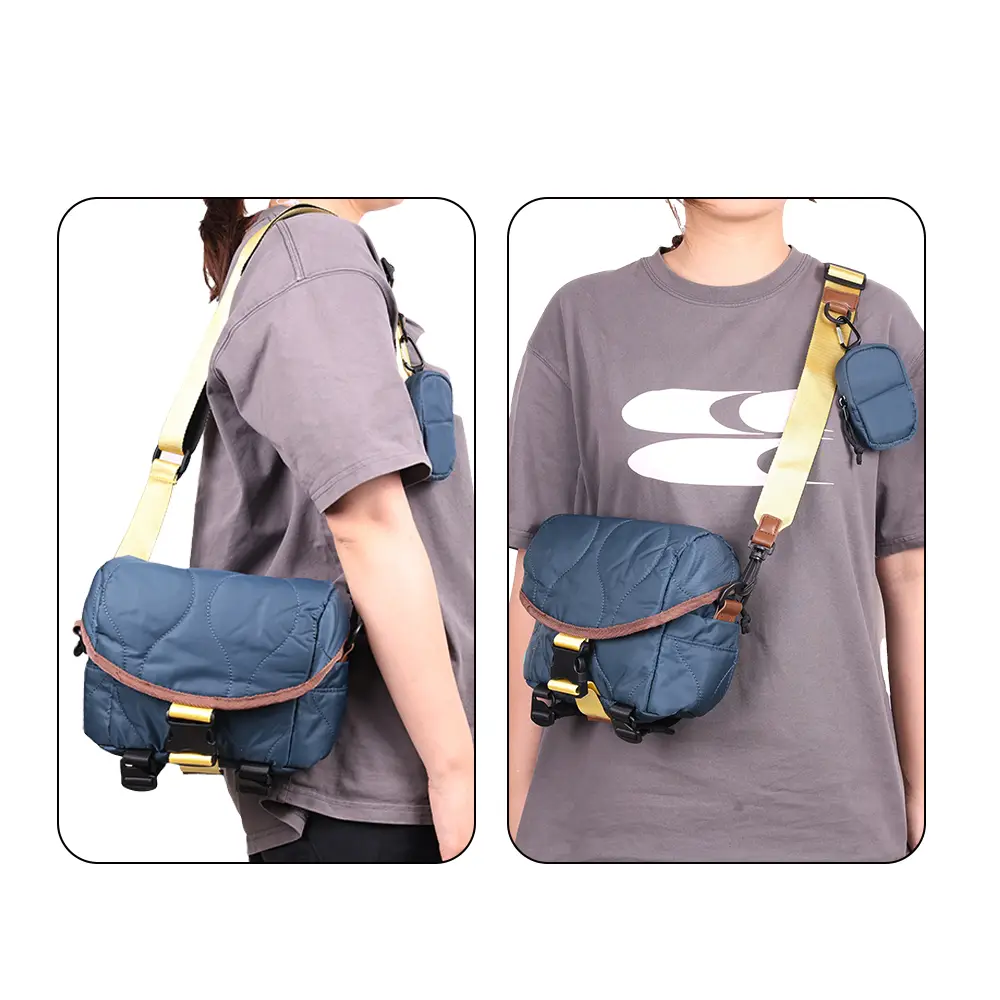
Breathability should not compromise the bag’s intended level of equipment protection. The camera-facing side needs controlled padding and structure, while the body-facing side can be optimized for moisture and comfort. ChangRong’s reference model uses quilted padding to protect camera gear, showing why these two functions should be treated as separate layers.
A useful construction can therefore place protective padding toward the equipment and a breathable contact layer toward the wearer. The seam layout should avoid creating hard ridges where the body rests. At the same time, openings in the mesh should not expose sensitive internal areas or become pathways for loose components.
The distinction matters especially in a lightweight camera bag for travel, where designers are balancing compact dimensions, protection, and comfortable carrying. The reference model measures 21 × 9.5 × 18 cm and is designed for photography, daily outings, and travel.
Give the Shoulder Strap Its Own Moisture Strategy
The strap deserves separate attention because it can remain pressed against the body even when the main bag panel shifts. A breathable back panel cannot solve sweat accumulation along a dense, non-breathable strap surface.
We would extend the ventilation logic into the shoulder contact area, using breathable material where pressure is sustained and keeping adjustment hardware from sitting directly on high-friction skin or clothing zones. Existing camera-bag designs demonstrate this principle by combining breathable back surfaces with ventilated shoulder components.
Strap geometry also affects airflow. A broad, heavily padded strap can distribute pressure, but its thickness and surface coverage may increase heat retention. A slimmer construction may ventilate better but require more careful load distribution. The correct choice depends on the bag’s intended load and how long it will be worn.
Test the Backing While the Bag Is Loaded and Moving
A breathable construction should be evaluated under realistic use rather than on an empty sample table. Add the intended camera load, adjust the strap to different carrying positions, and observe where the mesh remains compressed. Heat and moisture often appear at pressure points that are not obvious during a static inspection.
We recommend testing walking, repeated shoulder repositioning, and extended wear. The objective is not to promise a completely sweat-free experience; human perspiration varies with temperature, activity, clothing, and individual physiology. The more useful question is whether the construction reduces unnecessary heat retention and wet contact.
For a lightweight camera bag for travel, testing should also confirm that the ventilation structure does not make the product awkward to pack or carry. Compact travel equipment benefits when comfort features remain integrated into the original silhouette instead of becoming bulky add-ons.
Turn the Ventilation Pattern Into a Repeatable Production Detail
Once the breathable zones are confirmed, the design must be converted into a production specification. Record the mesh type, thickness, placement, seam boundaries, foam relationship, stitch pattern, and strap treatment. Do not leave ventilation as a vague instruction such as “add breathable mesh.”
ChangRong can use the same development logic when customization is required because the reference product supports changes to fabric and structure. A repeatable specification helps keep samples and bulk production aligned, particularly when a bag moves between colorways or different exterior fabrics.
Integrate Ventilation Into the Bag’s Pattern Architecture
The strong result comes from treating ventilation as part of the pattern architecture from the beginning. A crossbody camera bag should control where the body contacts the product, how air can move through that interface, and how the strap behaves under load. Mesh is only one component of that system.
By separating camera protection from body-facing comfort, shaping the contact zones, and testing the loaded product in motion, we can reduce the conditions that encourage sweat to remain trapped against clothing. ChangRong approaches the backing as a functional construction detail, not a surface decoration. That mindset gives designers a clearer path from breathable material selection to a practical, repeatable camera-bag specification.