Photographers rarely carry a camera in exactly one position. Walking through a city, waiting for a subject, entering a vehicle, and raising the camera to shoot can each require a different relationship between the bag and the body. A fixed-length shoulder strap makes those transitions slower or less natural.
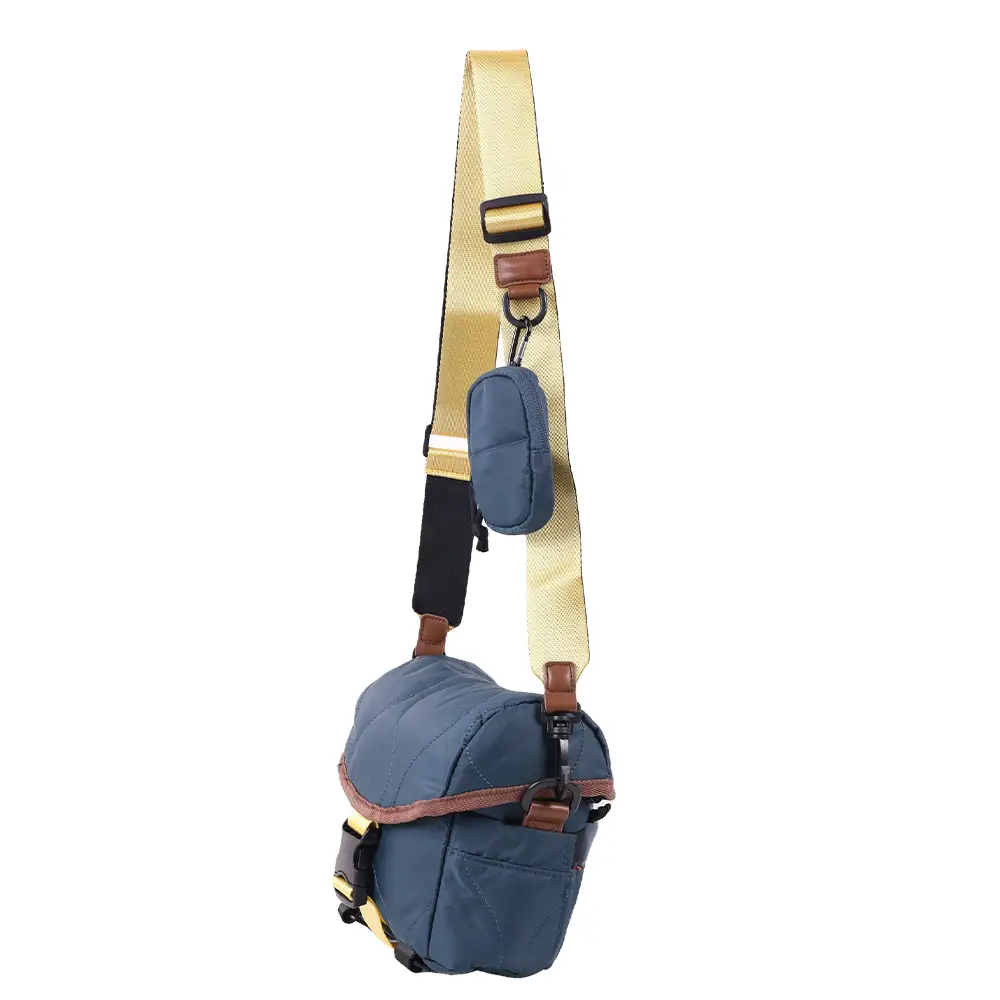
A quick-slide shoulder buckle addresses that problem by letting the wearer change strap length without completely removing the bag. For a camera sling bag, the mechanism can therefore become part of the shooting workflow rather than simply another piece of hardware.
The Adjustment Happens During the Carry
Traditional strap adjustment usually means stopping, finding the adjuster, pulling webbing through it, and then checking the new position. A quick-adjust system reduces that interruption by allowing the strap to be repositioned while the bag remains on the body.
Current camera strap designs demonstrate this principle through sliding adjusters that let users shorten or lengthen the webbing to change the carrying position.
The practical difference appears during movement. A photographer may want the bag closer to the torso while walking quickly, then bring it higher and nearer the chest before taking a photograph. Instead of treating these as separate carrying modes, the strap becomes continuously adjustable.
Our product development starts with this movement rather than the buckle itself. The hardware only works well when the webbing, strap width, bag attachment points, and the user’s natural motion are designed as one system.
Strap Travel Changes Camera Position
Changing strap length alters where the bag rests relative to the user’s shoulder, chest, and hip. That matters particularly for photography because access speed depends partly on how far the camera has to travel before it reaches the shooting position.
A crossbody configuration can keep a camera bag close to the body while leaving the hands available for shooting or other tasks. Current camera strap systems also use adjustable lengths to accommodate different body shapes and carrying preferences.
The amount of adjustment is only one part of the equation. Strap geometry determines how smoothly the bag moves along the body. Excess webbing, an incorrectly positioned buckle, or excessive friction can make an otherwise adjustable system awkward.
For us, the objective is controlled movement. The wearer should be able to change the bag’s position without fighting the strap or accidentally creating a loose section that interferes with handling.
Access Becomes Part of the Carrying Workflow
Camera access is where quick adjustment becomes particularly useful. A photographer may begin with the bag positioned behind the hip, then slide it toward the front when a subject appears. The bag does not need to be removed; its relationship to the torso simply changes.
The ChangRong camera bag uses adjustable straps and quick-release buckles to support photography, commuting, and travel. The adjustment system allows users to switch between shoulder and crossbody carrying configurations according to their carrying needs.
That relationship affects pocket placement as well. A compartment that is easy to reach from the hip may behave differently once the bag is pulled across the chest. Designers should therefore assess access points in multiple strap positions instead of judging pocket convenience with the bag sitting in only one location.
A good camera sling bag should make the transition feel deliberate. The strap adjustment, opening direction, zipper placement, and internal organization all need to support the same movement.
Stability Depends on More Than a Sliding Buckle
Fast adjustment creates a second requirement: the bag must remain controlled after repositioning. Camera equipment is sensitive cargo, so excessive movement can make the carry uncomfortable and complicate access.
Modern camera strap systems sometimes add secondary stabilization features. For example, PGYTECH describes an underarm strap intended to reduce camera movement during activities, while its quick-release system combines adjustment and locking functions.
A bag manufacturer should therefore avoid evaluating the buckle independently from the strap architecture. Webbing width, adjuster friction, shoulder padding, attachment angles, and the bag’s center of mass can all influence how the system behaves.
Buckle location also deserves attention. A component positioned directly under a pressure point can become uncomfortable, particularly during long carrying sessions. Real-world user discussions illustrate that hardware placement near the shoulder or collarbone can affect comfort even when the rest of the bag performs well.
Hardware Placement Shapes the Whole Bag
Quick adjustment changes more than strap length. It can influence where reinforcement is required, how the strap enters the body panel, and how the bag rotates when the wearer pulls it forward.
A crossbody camera bag therefore needs attachment points that support the intended range of movement. Reinforcement should correspond to the actual load path rather than simply being added wherever space is available.
We also consider whether the buckle should remain visible or sit beneath a padded section. A visible mechanism can reinforce a technical aesthetic, while concealed hardware may suit a cleaner urban design. Neither solution is universally better; the choice should follow the product’s intended identity and carrying behavior.
Material selection must follow the same logic. The hardware should provide consistent adjustment while remaining compatible with the webbing and construction method selected for the bag.
Prototype the Movement, Not Just the Appearance
A successful prototype needs to demonstrate more than attractive proportions. We test the strap at different lengths, move the bag from back to front, open compartments from multiple positions, and examine whether the buckle stays where the user expects it to stay.
Sampling should also include realistic camera and accessory loads. An empty bag can hide problems because its weight distribution differs from the finished product. Once equipment is inside, the center of mass can change how quickly the bag slides and how much force reaches the attachment points.
Integrate Adjustment Into the Bag’s Functional Architecture
We at ChangRong approach transformable camera products by combining adjustable carrying systems with functional construction rather than treating the strap as an afterthought. For OEM development, this distinction matters because a quick-adjust feature should be validated as part of the complete bag architecture.
The result is more than a faster buckle. A well-designed camera sling bag lets the photographer change position according to the moment without interrupting the carrying workflow. ChangRong can incorporate that movement into customized structures, helping brands develop camera bags where adjustment, access, stability, and appearance work together rather than competing with one another.