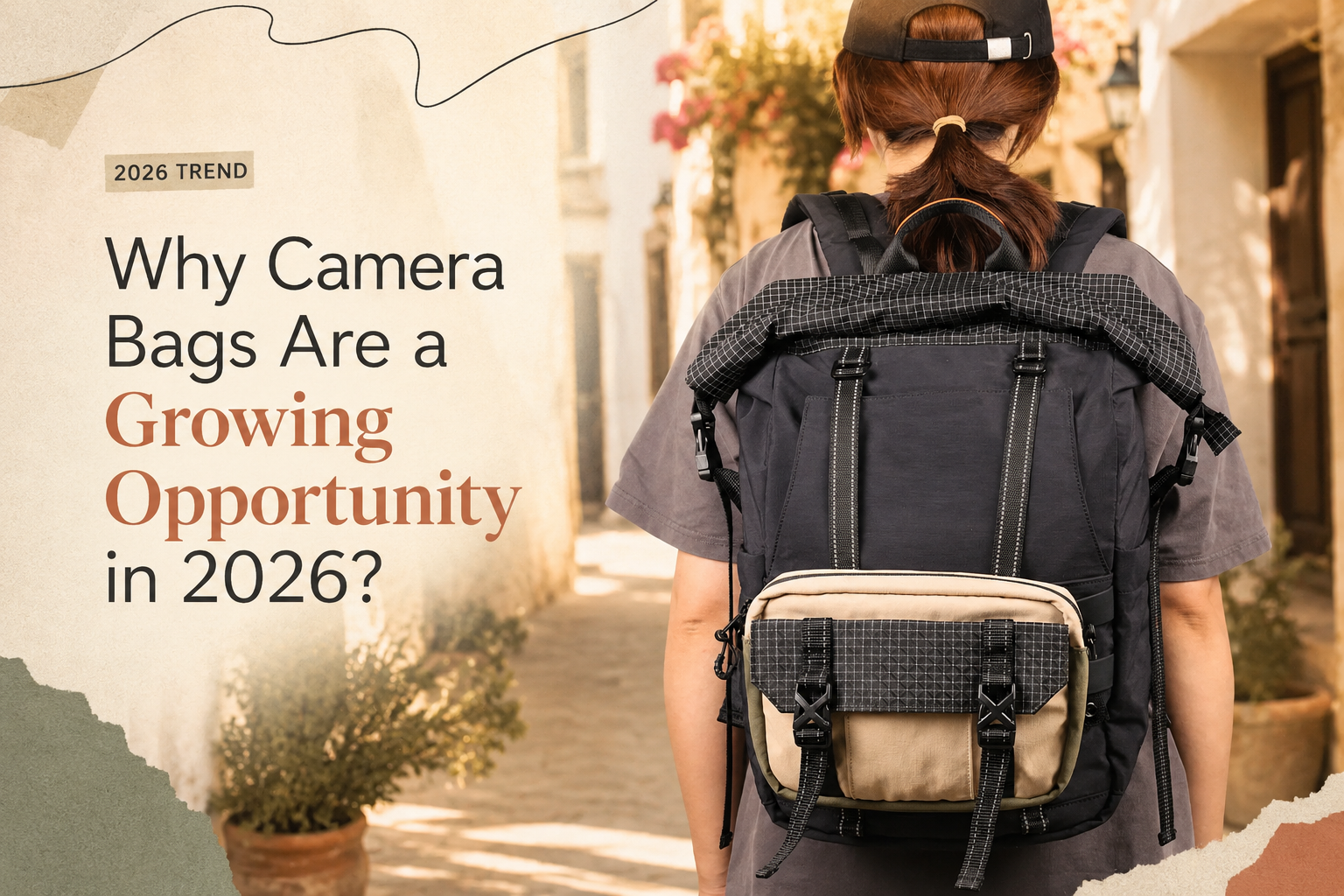
A camera bag that changes between backpack and sling modes cannot rely on a fixed shoulder-strap arrangement. Changing the way the bag sits on the body also changes where the load travels, where the camera rests, and how quickly the user can reach the equipment.
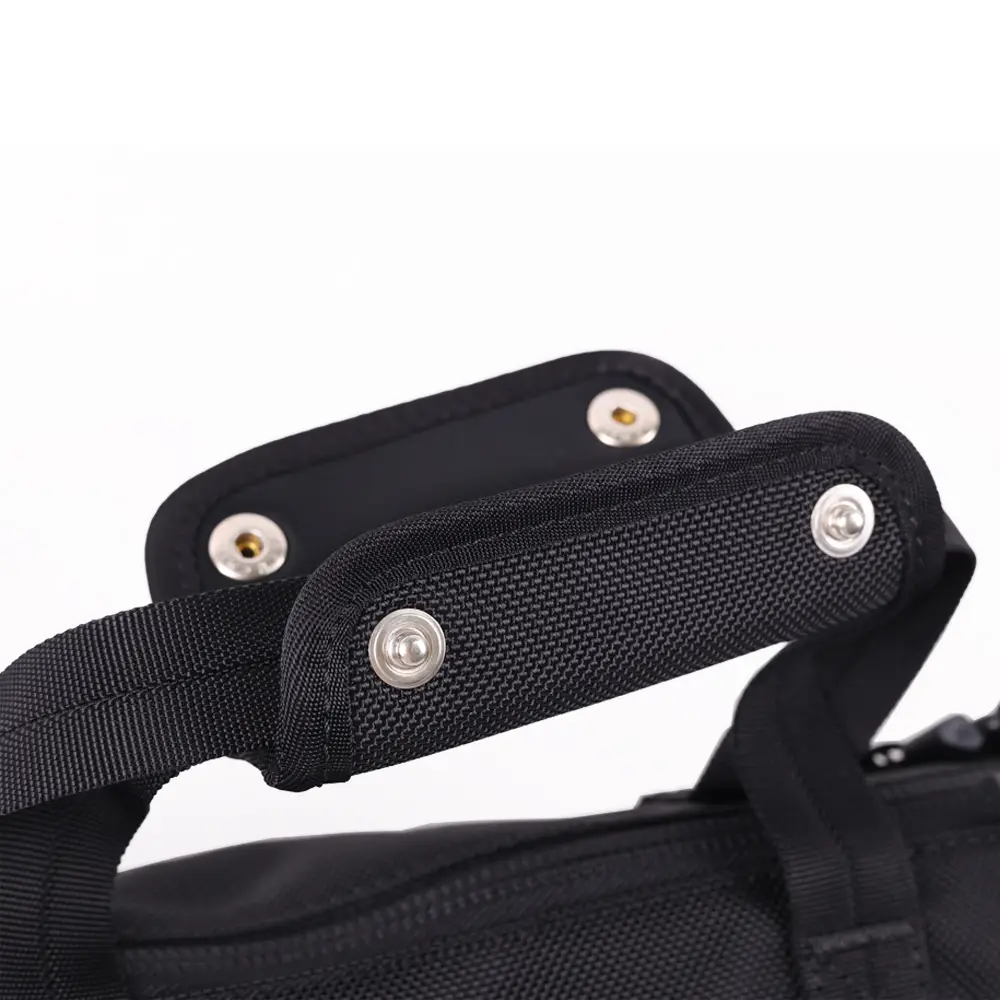
That makes strap adjustment a structural mechanism rather than a comfort accessory. For a convertible camera bag, the webbing, buckles, attachment points, and adjustment paths must work together through each carrying configuration. We approach the problem by looking at how the bag moves when the user changes position.
Changing Carry Mode Changes the Load Path
A backpack distributes its load differently from a sling. Two shoulder positions can support the bag from opposite sides, while a sling typically concentrates the load through one primary carrying path.
The transition between those modes therefore changes the direction in which the strap pulls against the bag body. The attachment points need to accommodate those different forces without making the body twist excessively.
The CXN1153 Functional Transform Series camera bag is designed for adjustable use and multiple storage needs. Its transformable structure can be adjusted according to different carrying and usage requirements, making it suitable for photography and daily use. That transformability makes strap architecture central to the product rather than an afterthought.
The Adjustment Point Has to Move With the User
Strap adjustment determines more than whether the bag feels tight or loose. It controls where the camera compartment sits relative to the user’s torso and how far the bag must move when the photographer reaches for equipment.
A strap that is too long in sling mode can allow the bag to swing farther from the body. Excessive movement can make access less controlled, particularly when the user rotates the bag toward the front.
Backpack mode creates a different requirement. The straps need enough adjustment range to position the bag securely across different users without forcing the camera compartment into an awkward height.
For an OEM design, adjustment range should therefore be considered together with bag dimensions and the intended equipment load. The CXN1153 measures 31.5 × 12.5 × 32 cm, giving the strap system a defined bag geometry around which these decisions can be developed.
Backpack and Sling Modes Need Different Strap Geometry
A backpack configuration generally benefits from symmetrical support, while a sling configuration requires the bag to sit at an angle across the torso. The same strap therefore needs to accommodate different orientations without becoming twisted or difficult to reposition.
The webbing route is particularly important. A strap can be adjustable yet still perform poorly if its attachment points force an awkward angle when the bag changes mode.
Designers should map the strap path in each configuration before finalizing hardware. Look at where the webbing contacts the shoulder, where it enters the bag, and whether the bag remains correctly oriented after the user rotates it.
ChangRong approaches convertible products as adjustable structures rather than simply adding extra straps. The CXN1153 is part of the Functional Transform Series and supports custom structural development.
Hardware Placement Controls More Than Strap Length
Adjustment hardware determines where the user can change the strap and how easily the configuration can be altered. Buckle position also affects where hardware sits against the body and whether it interferes with camera access.
A buckle located too close to the shoulder can become uncomfortable when the photography shoulder bag is heavily loaded. Placing it too far along the body can make adjustment difficult while wearing the bag.
Attachment points deserve equal attention. Webbing needs a secure connection with the bag panel, and the surrounding construction must tolerate the repeated force created when the strap is pulled, adjusted, or redirected.
For a private-label photography product, these details should appear in the sample specification rather than being left to assembly interpretation. The strap length, webbing width, adjustment location, hardware type, attachment construction, and intended carrying modes should all be defined.
Repeated Conversion Is a Mechanical Wear Problem
A convertible bag may be adjusted far more frequently than a fixed-format camera bag. Every conversion can move webbing through an adjuster, load a buckle, and place repeated stress around the attachment points.
The development sample should therefore be examined beyond its first successful conversion. Adjust the strap repeatedly and inspect whether the webbing develops visible deformation, whether hardware remains secure, and whether the adjustment still operates smoothly.
The surrounding fabric should also be checked. Repeated pulling can concentrate stress at a small section of the bag body, particularly when the same attachment point serves multiple carrying configurations.
ChangRong supports customization of structure, fabric, color, and logo for the referenced camera-bag product, making these mechanical details suitable for discussion during product development rather than being restricted to an off-the-shelf configuration.
The Final Test Is Switching Modes With Real Camera Weight
An empty bag cannot show the complete behavior of a convertible strap system. Camera equipment changes the center of mass and can make an apparently stable configuration behave differently.
Testing should therefore begin with the intended internal load. Adjust the bag into backpack mode, carry it, remove or reposition the equipment, and then convert it into sling mode. Observe whether the strap remains correctly positioned and whether the bag rotates predictably during the transition.
Access should be tested at the same time. A useful convertible design should not require excessive strap manipulation every time the photographer wants to move from carrying to shooting.
Treat Strap Conversion as a Structural System
A well-engineered convertible camera bag treats shoulder-strap adjustment as part of the product’s load-bearing architecture. Webbing, attachment points, hardware, bag dimensions, and camera placement all influence how successfully the product changes from backpack to sling.
When building photography products, the effective prototype isn’t just an empty sample—it’s a working model that gets repeatedly refined and tested using real, heavy gear. Once both carry modes pass the test for stability, quick access, and smooth mechanics, that multi-functional concept transforms from a simple design feature into a rock-solid product foundation.