A camera bag can protect expensive equipment and still become uncomfortable after an hour of carrying. The problem often begins where the bag touches the body. A flat, dense back panel creates a warm contact zone, while moisture has fewer opportunities to dissipate.
That is why camera bag wholesale buyers increasingly pay attention to breathable mesh padding rather than treating the back panel as simple cushioning. Research on backpack ventilation shows that back-panel structure can influence sweat, temperature, humidity, and perceived thermal comfort. In one 2025 study, a ventilated design reduced measured sweat by up to 21.6% under the tested conditions.
Why Back-Panel Design Affects Heat Management
A loaded camera bag presses its rear panel against the wearer’s back. During walking, commuting, or outdoor shooting, body heat and perspiration accumulate at that interface.
The challenge becomes greater when padding is continuous and compressed. Cushioning may improve softness, but excessive contact can restrict the movement of air immediately next to the body.
A 2023 study using a sweating thermal manikin found that back-panel design fundamentally affected thermal insulation and evaporative resistance. It also reported that ventilation structures forming tunnels between the backpack and body produced more efficient heat dissipation than breathable filling material alone.
Mesh Padding Works by Changing the Contact Surface
Breathable mesh does more than introduce a porous textile. Three-dimensional padding can create small spaces within the back-panel construction, reducing continuous contact and giving warm, humid air more opportunity to move.
The distinction is important. A fabric may be highly air-permeable when tested by itself, yet provide limited cooling if it is pressed directly against the body or backed by an impermeable layer.
Research from PolyU found that a ventilating backpack structure could create better air circulation in the gap between the body and the pack and improve thermal comfort during cycling.
For camera bags, the practical objective is therefore not simply “more breathable fabric.” It is a back-panel structure that maintains useful airflow while still providing support.
Air Permeability Alone Is Not Enough
A breathable surface cannot compensate for poor geometry. If the bag collapses against the back under load, ventilation pathways may become restricted even though the outer mesh remains porous.
Padding thickness also needs context. Excessively soft foam can compress substantially, while a highly rigid structure may create uncomfortable pressure points. The useful design sits between unrestricted movement and stable support.
A 2025 backpack study directly compared breathable materials with ventilation-oriented back-panel structures. Its results indicated that structural ventilation was more effective for thermal comfort than breathable material alone.
That finding changes how we evaluate a camera gear bag. The mesh, foam, panel shape, and contact pattern should be considered as one system.
Camera Loads Make Back-Panel Design More Complicated
Photography equipment creates a different loading pattern from an empty everyday backpack. Cameras, lenses, batteries, and accessories concentrate mass inside specific areas, changing how the rear panel presses against the wearer.
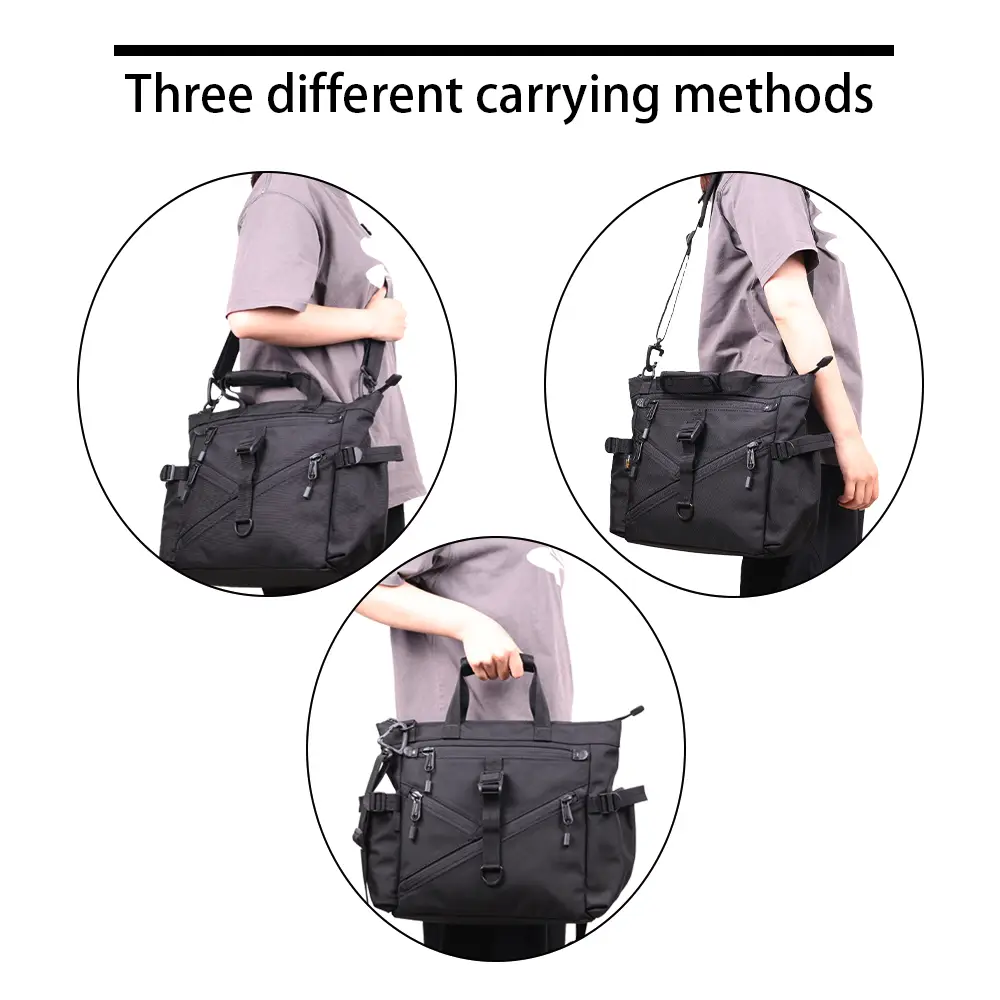
Our photography bag uses a multi-pocket configuration for camera equipment, accessories, daily use, and outdoor activities. Its adjustable structure allows the internal arrangement to be adapted to different carrying needs.
That flexibility makes the rear construction particularly relevant. Moving equipment can alter the center of mass, while heavier loads can compress padding more strongly.
A good back panel therefore has to remain comfortable after the bag is packed, not only when examined as an empty sample.
Why Wholesale Buyers Should Examine the Construction
For camera bag wholesale buyers, “breathable back panel” is too broad to be a useful specification by itself. Ask what actually creates the ventilation: open mesh, spacer construction, molded channels, separated contact zones, or a combination.
The attachment method deserves attention too. Stitching, lamination, binding, and backing materials can change the effective airflow path. A breathable outer mesh loses much of its value if dense construction blocks the space beneath it.
We also recommend examining the panel with a realistic load inside the bag. A construction that feels ventilated when empty may behave differently once camera equipment compresses the padding.
How We Validate the Back Panel in a Camera Bag
At ChangRong, we evaluate back panels as part of the complete carrying system instead of vetting mesh on its own. Prototyping starts with a loaded bag to properly test compression and weight distribution.
We test padding compliance against body shapes, verify airflow clearance, and screen for pressure hot spots. Extended testing is vital because short-term comfort seldom predicts all-day endurance.
Scientific testing can provide additional evidence. Researchers have evaluated backpack thermal behavior using controlled loads, wind speeds, movement levels, skin measurements, and thermal manikins. Such work reinforces the importance of testing the actual structure rather than relying solely on textile specifications.
Breathability Has to Survive the Finished Product
The useful lesson for camera bag wholesale suppliers is that breathable mesh is not an isolated material upgrade. Its value depends on whether the finished back panel preserves airflow while supporting the equipment load.
When we design at ChangRong, we always keep the total carrying ecosystem in view. We make sure that every element—from the mesh and foam to the panel shape, internal weighting, and build construction—works seamlessly together.
Evaluate Breathability as a Complete Back-Panel System
For a camera gear bag intended for photography and daily carrying, the target is not to promise that users will never sweat. A more defensible goal is to reduce heat and moisture accumulation and improve comfort under the conditions for which the bag is designed.
Sourcing from a camera bag wholesale partner requires moving past basic material checklists like “breathable mesh.” Instead, brands must ask whether the complete back-panel design keeps air circulating after adding padding, seams, weight, and real-world movement.