A laptop compartment can look heavily padded and still leave a MacBook vulnerable to a hard landing. The critical question is not simply how much foam surrounds the computer, but what happens when the backpack suddenly stops. If the laptop sits directly against the bottom structure, impact can travel through a short, rigid path into the device.
Suspension changes that relationship. A dedicated sleeve can be positioned above the base, creating clearance beneath the computer while flexible attachment points and cushioning help manage movement. For a modular laptop backpack, that architecture turns the compartment into an engineered protection zone rather than a padded pocket.
Why the Bottom of a Laptop Compartment Matters
Imagine a loaded backpack slipping from a chair. The exterior may contact the floor first, but the laptop continues moving inside the bag until its motion is stopped. A compartment with no meaningful clearance can transmit that deceleration through its base.
The problem becomes more pronounced around corners and edges. A laptop is not equally vulnerable at every point, so protection has to prevent concentrated contact as well as absorb general shock.
Independent laptop-case testing illustrates the value of padding placement: in one comparison, some sleeves protected a test object from a two-foot drop while several bags did not. The result does not establish a universal protection rating, but it demonstrates why construction matters alongside the mere presence of padding.
What Suspension Changes During Impact
A suspended sleeve separates the laptop from the lowest part of the backpack. Instead of allowing the device to rest on the base, straps, fabric panels, foam, or other flexible structures can support the sleeve above it.
That separation creates another layer in the impact path. During a sudden drop, the suspension components can deform or move before the laptop reaches the end of its available travel.
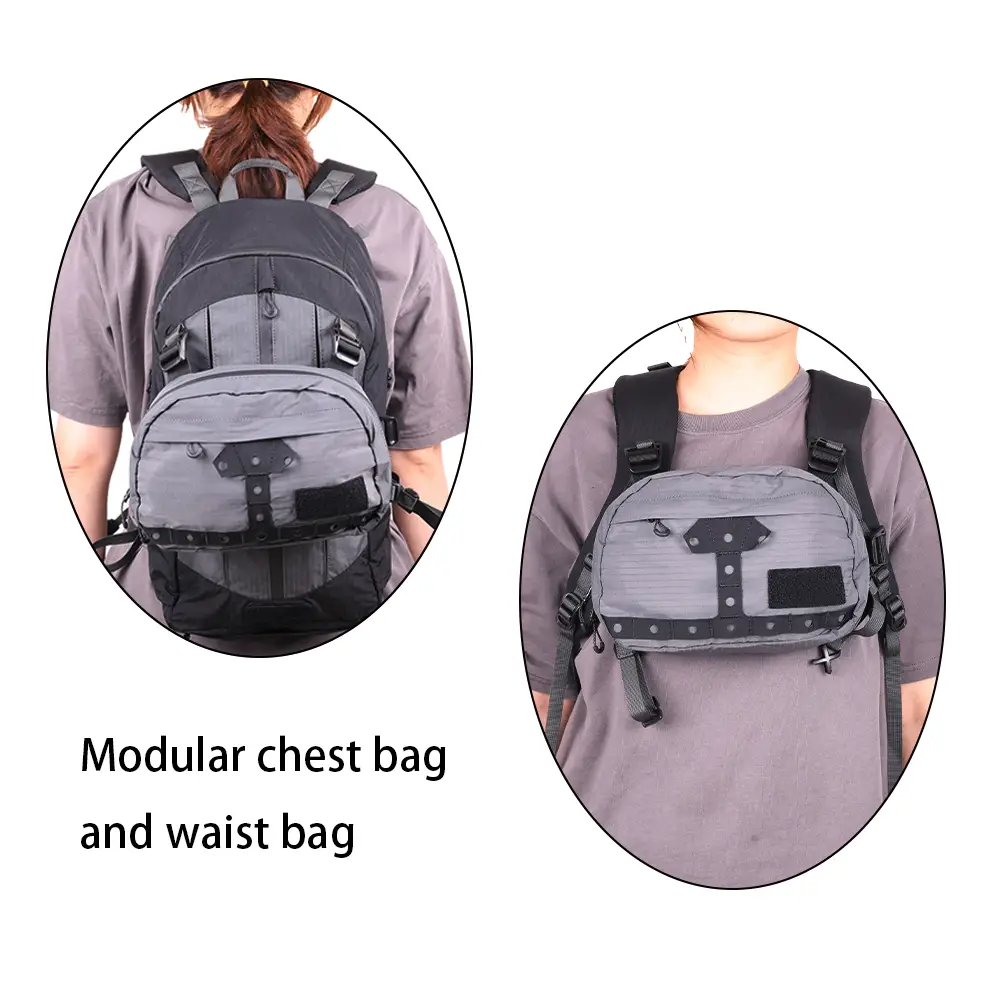
A modular laptop backpack can take this concept further by integrating the suspended sleeve into a larger compartment system. The goal is not to make the laptop float indefinitely; practical design must control movement while maintaining useful capacity and easy access.
Padding Has to Manage More Than One Force
Foam is only one component of impact protection. Its job depends on density, thickness, geometry, placement, and how it interacts with the outer fabric and sleeve lining.
The sleeve also needs to limit lateral movement. Internal straps or a close-fitting compartment can keep the laptop positioned inside the protective envelope. Commercial protective sleeves, for example, commonly combine padding with internal retention features rather than relying on cushioning alone.
Fit therefore becomes part of the engineering problem. A compartment that is excessively loose may allow the laptop to gain more momentum before contacting the protective structure. An excessively tight design can create pressure and make insertion difficult.
Building a Meaningful Drop Test
A useful drop test should reproduce a defined scenario instead of producing an impressive-looking number without context. Test engineers need to specify the drop height, orientation, surface, bag loading, laptop mass or surrogate, and measurement method.
The orientation matters because a backpack can strike the ground on its base, back, side, or corner. Each direction creates a different load path through the construction.
Military-style laptop protection tests also demonstrate that standardized procedures exist for evaluating shock resistance; some commercial sleeves explicitly reference MIL-STD-810G-516.6. That reference should not automatically be transferred to another bag unless the exact product has actually undergone the relevant test.
Why Retention and Fit Belong in the Test
A drop is not necessarily finished when the outer bag touches the ground. Internal movement can determine what happens next. If a laptop shifts significantly inside its sleeve, a corner or edge may approach the compartment wall at an unfavorable angle.
We therefore consider retention alongside cushioning. The laptop should remain positioned within the intended protective area while the suspension system has enough flexibility to perform its job.
ChangRong approaches this as a complete construction issue. During prototype development, we examine the sleeve attachment, bottom clearance, padding placement, closure, and surrounding compartment instead of evaluating one foam panel in isolation.
Translating Test Results Into OEM Design
A useful test result should lead to a design decision. If impact reaches the laptop primarily through the base, increasing clearance or changing the suspension attachment may be more productive than simply adding foam everywhere.
If the device shifts laterally, the solution may involve retention geometry. If pressure from packed accessories reaches the laptop compartment, internal separation becomes more important.
This is where working with a private label bag manufacturer early can reduce redesign. Prototype testing can reveal whether the intended protection concept survives actual sewing, loading, compression, and handling.
Our reference modular backpack is designed around transformable daily and outdoor use, so its laptop protection cannot be separated from the bag’s broader modular architecture. A protection system must coexist with compartments, access points, and usable carrying space.
What Everyday-Carry Buyers Should Actually Evaluate
For shoppers looking for the best backpack everyday carry, a suspended sleeve is particularly interesting because it changes the impact path rather than simply adding another layer of foam. Yet no backpack should be assumed to protect a MacBook from every possible drop without product-specific testing.
Impact protection is approached by ChangRong as a structural design problem: identify the most probable failure mode, develop a controlled load path, construct the prototype, and conduct final testing. Impact performance depends on the intended use conditions as well as factors such as clearance, support structure, cushioning, and retention.