Carrying camera equipment through a city or on a long shooting day creates a very different problem from carrying an empty everyday bag. The total load may be concentrated in a relatively small compartment, and that weight reaches the body through a narrow strap. A padded strap wing changes that interface by giving the load a broader area over which to act.
The idea is not simply to add more foam. A useful strap wing combines width, padding, contour, webbing placement, and attachment geometry. When we develop a Camera Sling Bag for heavier equipment, we look at how those elements interact rather than judging cushioning in isolation.
Why Concentrated Weight Creates a Carrying Problem
A strap transfers the bag’s load to a relatively small region of the shoulder or torso. Narrow contact concentrates pressure, particularly when the bag contains dense items such as a camera body, lenses, batteries, or other accessories.
Increasing the contact area can change that pressure distribution. A wider padded section gives the strap a larger interface with the wearer, while the cushioning helps manage the shape of that interface as the load moves.
The distinction matters because soft padding alone does not guarantee comfortable carrying. Very thick foam can compress substantially under load, while an overly narrow strap can still concentrate force around its edges. The physical dimensions and construction need to match the intended load.
Our approach starts by asking where the wearer actually feels the load. If pressure concentrates near the shoulder, extending the padded section or adjusting its contour may be more useful than simply increasing foam thickness.
How A Strap Wing Changes the Load Path
A strap wing can be understood as a broader transition between the strap and the wearer’s body. Instead of allowing the strap’s narrow webbing to remain the primary contact surface, the wing creates a larger padded interface.
That interface can also influence how the bag hangs. A wider shoulder section can help keep the strap from behaving like a narrow band when the bag becomes heavier. The goal is controlled contact rather than unrestricted movement.
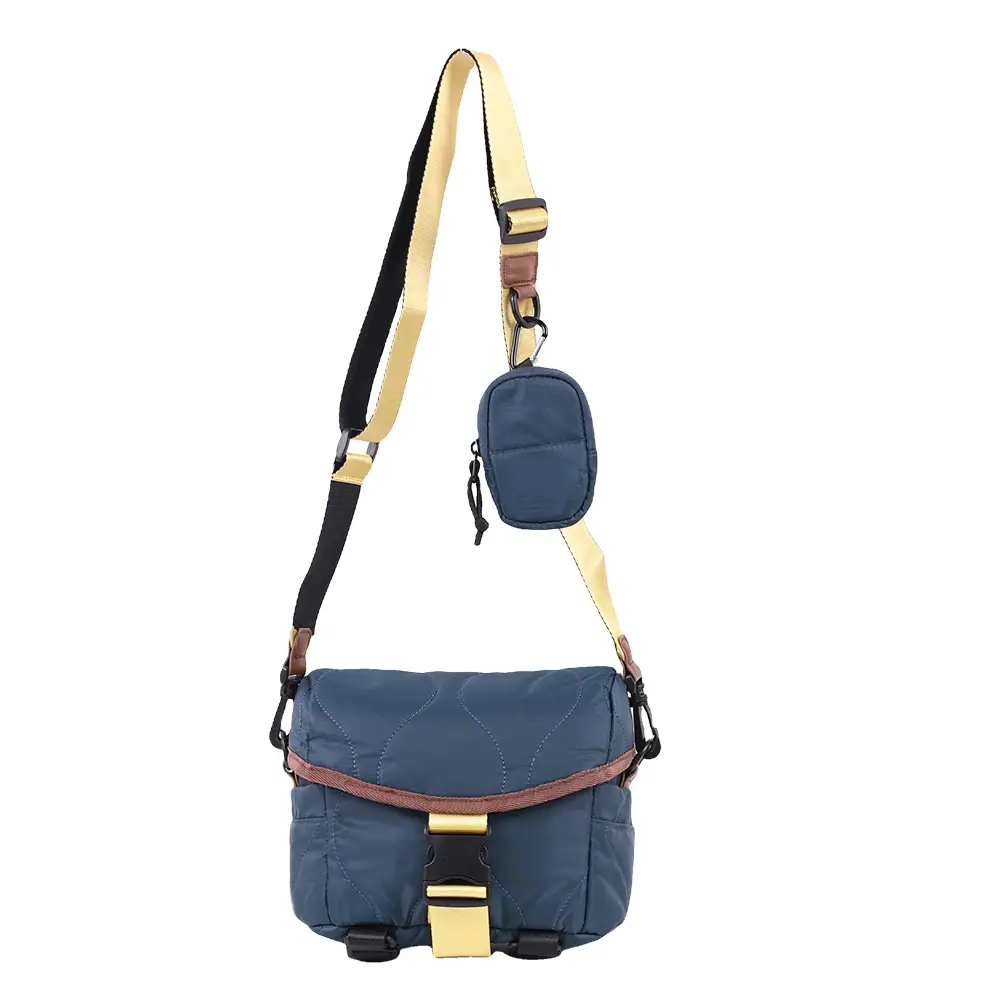
The ChangRong product feature padded protection, adjustable shoulder and crossbody straps, and quick-release access hardware. These features support photography, commuting, and travel use while providing flexible carrying and convenient access to the bag’s contents.
The practical lesson is that padding should be considered together with adjustment. A well-padded wing placed on a poorly positioned strap can still create an awkward carrying angle.
Padding Works Only When Geometry Supports It
Foam has a limited role: it can cushion contact, but the surrounding structure determines how effectively the padded area behaves. Shape, width, edge construction, and the transition into the webbing all influence the result.
A curved or tapered wing can follow the shoulder more naturally than a rectangular pad. Edge thickness also matters. Abrupt transitions can create pressure points even when the center of the pad feels soft.
Material selection needs the same level of attention. The outer fabric should protect the padding from abrasion and maintain the intended appearance, while the internal cushioning should retain an appropriate shape under repeated use.
A photography sling bag may also move frequently between the side, front, and rear of the torso. That movement means the wing should not be designed for one perfectly static position. Its geometry needs to remain functional as the bag changes position.
How Attachment Points Affect Load Distribution
Padding cannot compensate for a poorly positioned attachment point. The strap connection determines how the bag’s weight enters the shoulder system and how the body of the bag hangs from it.
An attachment placed too close to one edge can make the bag twist under load. A poorly aligned connection can also cause the padded wing to rotate away from the shoulder, reducing the area that was intended to distribute pressure.
We therefore examine the strap, reinforcement, seam direction, and bag panel as one load path. The connection needs adequate reinforcement for the intended construction, while the strap angle should remain compatible with the way the bag is expected to sit.
Adjustment hardware introduces another variable. Changing strap length changes the angle and position of the bag, so the wing should continue to function across the useful adjustment range rather than only at one setting.
Heavy Gear Changes The Design Equation
A camera bag cannot be evaluated only by its empty weight. The contents determine how much force reaches the strap and where the center of mass sits. Two bags with identical dimensions can behave differently if their internal loads are distributed differently.
The product reference lists a compact 21 × 9.5 × 18 cm format and identifies adjustable shoulder/crossbody carrying as part of the design. It also describes quilted padding intended to protect camera equipment. These details illustrate why exterior carrying comfort and internal protection have to be developed together.
For heavier configurations, we examine compartment placement as well as strap construction. Dense equipment positioned far from the body can increase leverage and make the bag feel more demanding to carry.
That is why we avoid specifying a strap wing based on foam thickness alone. The intended equipment, carrying orientation, adjustment range, and attachment position all belong in the design brief.
Prototype The Loaded Carry, Not The Empty Bag
An empty sample can make almost any padded strap look successful. The meaningful test begins after representative equipment is placed inside. We inspect the strap from several positions and adjust its length to see how the wing behaves as the bag moves.
Our sampling process focuses on contact, balance, movement, and attachment behavior. The wearer should not have to constantly reposition the bag because the padded section shifts away from the shoulder.
Translate Carrying Comfort Into Production Specifications
At ChangRong, we also consider how the strap construction integrates with the rest of the bag during OEM development. A manufacturer needs to translate the comfort objective into pattern dimensions, padding construction, webbing placement, reinforcement, and repeatable assembly.
When crafting photography sling bags, settling for a generic “padded strap” specification falls short; brands need to detail expected weight loads, carry angles, adjustment lengths, ergonomic contact zones, and durable attachment construction.
Treat the Strap as Part of the Load-Management System
We at ChangRong approach strap design as a vital element of the bag’s overall carrying ecosystem. A well-made Camera Sling Bag relies on more than just plush padding, expertly managing weight distribution, body-hugging surface contact, and stability while on the move.
That is the real value of a padded strap wing. It is a load-management feature disguised as a comfort detail. When the geometry, padding, webbing, and attachment points are designed together, heavier camera equipment can be carried with a more controlled and balanced interface. ChangRong can incorporate those requirements into customized photography sling bags from the prototype stage onward.