A photographer may know exactly which accessory is needed and still lose time finding it. The problem is often not insufficient storage but poor access: the pocket is behind the wrong panel, the opening faces away from the hand, or the compartment is so deep that the user has to search inside it.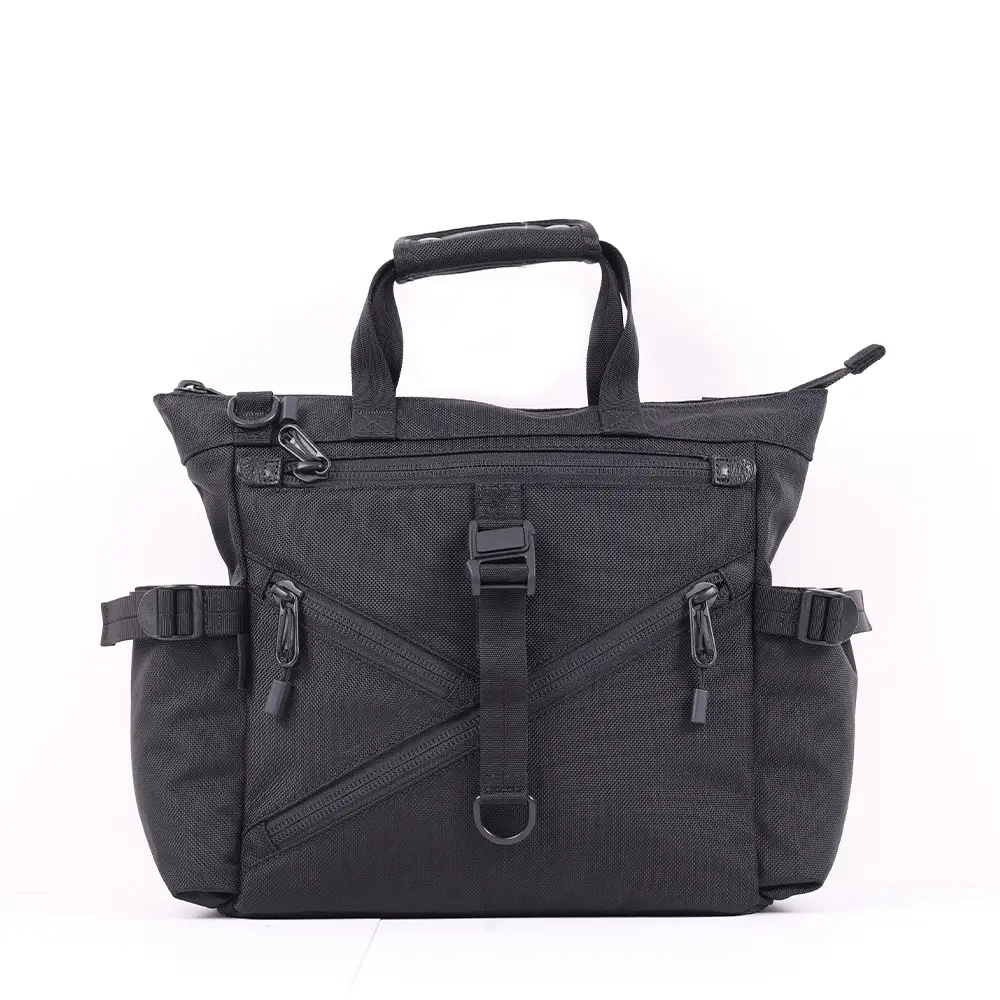
That makes quick-draw side storage a movement problem rather than a pocket-count problem. When we develop a multi-pocket camera bag, we look at the complete retrieval action: where the hand starts, how the bag is positioned, how the opening is reached, and whether the accessory can be removed without disturbing the camera equipment.
A Fast Pocket Starts Before The Hand Reaches The Bag
The first design decision is deciding what deserves immediate access. Photographers do not normally need every accessory at the same frequency. A spare battery, memory card, lens cloth, or small personal item can have a very different retrieval pattern from a camera body or interchangeable lens.
That difference should determine where storage is placed. A side compartment is valuable when it removes a small but repeated action from the main equipment compartment. Instead of opening the central storage area, moving protective dividers, and searching among larger items, the user reaches directly for a dedicated accessory zone.
The ChangRong camera bag uses a multi-pocket design with multiple exterior and interior compartments for photography equipment and accessories. Measuring 31.5 × 12.5 × 32 cm, the bag requires careful pocket planning to make efficient use of its available space.
The Side Panel Has To Present The Right Opening
A quick-draw compartment only becomes quick when the hand approaches it naturally. Camera bags move during use, so the designer has to consider more than the bag sitting upright on a table.
A photographer carrying a bag across the body may pull it toward the front before reaching for an accessory. During that movement, a side pocket can become temporarily angled or partially obscured. Its zipper path and opening direction should still make sense from the position where the hand actually arrives.
Our design process carefully maps how strap positioning interacts with pocket angles. We know that placing a zipper purely for aesthetic balance can compromise real-world accessibility—particularly if users reach in from the top or side.
The ChangRong camera bag features a practical multi-pocket design for photography, travel, outdoor activities, and daily use. Its transform-oriented construction integrates exterior organization with different carrying configurations.
Pocket Depth Can Decide Whether “Quick-Draw” Actually Works
More volume is not necessarily better for a quick-access pocket. If an accessory falls toward the bottom of a deep compartment, the user’s fingers may have to enter farther into the bag and search around other objects.
A shallower compartment can make small accessories easier to identify by touch and sight. Its dimensions should therefore correspond to the objects it is intended to hold. A pocket for a memory-card case needs a different geometry from one designed for a compact charger or battery pack.
Opening size matters at the same time. A narrow zipper opening can restrict the hand even if the compartment itself is relatively spacious. Extending the opening may improve access, but it also changes seam length, panel construction, and the amount of reinforcement required around the pocket mouth.
The size of the entrance and the inside volume are considered independent variables. When the user’s hand can easily insert, find, and remove the desired item from the pocket without any additional manipulation, the pocket becomes really useful.
One-Handed Retrieval Changes The Construction
Quick-draw storage becomes particularly useful when the photographer’s other hand is occupied with the camera. That means the pocket should not assume that both hands will be available to hold the bag and operate the opening.
Zipper pull placement becomes significant. A pull that is easy to grasp from the expected hand position can reduce the need to rotate the bag. The surrounding fabric should also resist collapsing excessively around the opening, otherwise the user may need a second hand to keep the pocket accessible.
Closure behavior matters after retrieval as well. An opening that remains awkwardly exposed can allow contents to shift or make the next movement less predictable. The designer needs to balance easy entry with controlled closure.
At ChangRong, we look at these interactions during sample development instead of approving the zipper and pocket independently. Hardware, webbing, panel stiffness, seam construction, and pocket shape all contribute to the same one-handed movement.
Accessory Storage Should Not Compete With Camera Protection
A camera gear bag has two different organizational priorities: immediate access and equipment protection. Combining them without a clear hierarchy can make both functions worse.
Frequently accessed small items can occupy side storage, leaving the central camera area relatively undisturbed. Larger equipment can remain inside dedicated compartments where the structure is designed around the size and arrangement of the gear.
That separation also reduces unnecessary opening of the main camera compartment. Each time the photographer needs a minor accessory, there is less reason to expose the primary equipment area.
The ChangRong photography bag features multiple pockets for organizing equipment and accessories, with differentiated storage zones designed for different carrying needs.
For a camera gear bag, we would therefore assign a specific retrieval purpose to every quick-access compartment. If a pocket cannot be given a clear use case, its space may be more valuable elsewhere.
Why Dynamic Use Matters When Evaluating Camera Bag Pockets
A pocket can look accessible when the bag is displayed on a table and become inconvenient once the photographer is moving. Real evaluation should reproduce the sequence that the product is intended to support.
We test the bag worn in its intended carrying position, move it toward the front or side, operate the opening with one hand, retrieve representative accessories, and return the bag to its normal position. That sequence reveals problems that static inspection cannot.
Pocket contents should also be realistic. A nearly empty compartment tells us little about whether two accessories will interfere with one another when stored together. A fully loaded sample can reveal whether the pocket distorts the neighboring panel or changes the bag’s balance.
Design Each Pocket Around a Defined Access Path
The objective is not to make every pocket accessible from every direction. That would add unnecessary complexity. Instead, each quick-draw compartment should have one clear and predictable access path.
A successful multi-pocket camera bag therefore organizes movement as much as it organizes equipment. The side compartment should appear where the photographer expects it, open along a usable path, provide enough room for the intended accessory, and remain separate from protected camera storage.
ChangRong approaches this type of development by treating pocket architecture as part of the bag’s operating system. Our OEM/ODM service supports customization of structural elements, allowing storage arrangements and internal layouts to be adapted to specific product requirements.
Translate User Movement Into Production Details
An important feature is not, therefore, “add a quick-access side pocket.” The design process should specify the item being retrieved, the expected hand movement, the opening direction, whether one-handed operation is required, and the carrying posture.
Pocket size, zipper positioning, reinforcement, and sample construction may all be adjusted by ChangRong based on that movement. The end product is a side pocket that is more suited to practical photography tasks than to being an extra cosmetic pocket.